

If you want to watch Peacock while traveling or just need a more reliable way to access Peacock TV on a crowded network, server quality and unblocking consistency matter far more than any single feature. We tested the best VPNs for Peacock with a simple goal: stable US access, enough speed for HD and live sports, and apps that do not turn setup into a Saturday project. In practice, the right service helps you sign up, connect fast, and get back to TV shows or live events without friction.
We focused on providers with consistent US servers, good device support, solid privacy and security, and a refund policy that gives you time to test the service with your own plan, devices, and home connection. Streaming platforms may discourage location workarounds in their terms, and some countries restrict VPN use, so readers should check local rules before using any VPN abroad. If you want to use Peacock outside the US, the details matter even more because location checks can be stricter and the right server can make the difference between success and a blocked login.
We also looked at the usual deal-breakers: proxy errors, slow server rotation, overloaded locations, and apps that make it harder than necessary to stream Peacock on a phone, laptop, or smart TV. NordVPN led our test for overall Peacock access, ExpressVPN was the easiest to set up, and Surfshark offered the best value per month if you need coverage across many devices.
2026 Shortlist for Peacock Streaming

NordVPN
Why it made the list
- Fast US servers and fewer streaming dropouts.
- Large US server coverage with many city options
- Very strong speed for HD and live Peacock streams

ExpressVPN
Why it made the list
- Simple apps and Smart DNS for TVs.
- Very simple apps with quick server selection
- Smart DNS support helps on devices without native VPN apps

Surfshark
Why it made the list
- Unlimited devices on one low-cost plan.
- Lower price than many top competitors
- Unlimited simultaneous connections on one subscription
Peacock can be a little pickier than its broad catalog suggests. The service may load on one US server and reject the next, especially during peak events or live sports windows, which is why a generic VPN recommendation is not enough. For this Peacock TV guide, we prioritized providers that gave us repeatable access to Peacock, recovered quickly when a location was blocked, and kept enough speed in reserve to watch Peacock without constant buffering. If you want to watch Peacock TV while abroad or on an unfamiliar network, you need a reliable VPN, not just a basic privacy tool.
For someone using Peacock on a hotel laptop with an unfamiliar network, the VPN has to both bypass the location check and hold enough speed for live playback — two requirements a weak provider rarely meets at once. We also weighed value: price per month, device limits, refund terms, privacy and security basics, and how easy it is to find a working server without digging through menus. A free VPN is rarely the right tool for Peacock streaming: crowded servers, slow speed, and blocked IP ranges make reliable access unlikely. That is why the best free VPN for Peacock is usually not free at all, but a paid service with a free trial or a refund window you can test before committing.



How to Watch Peacock TV with a VPN
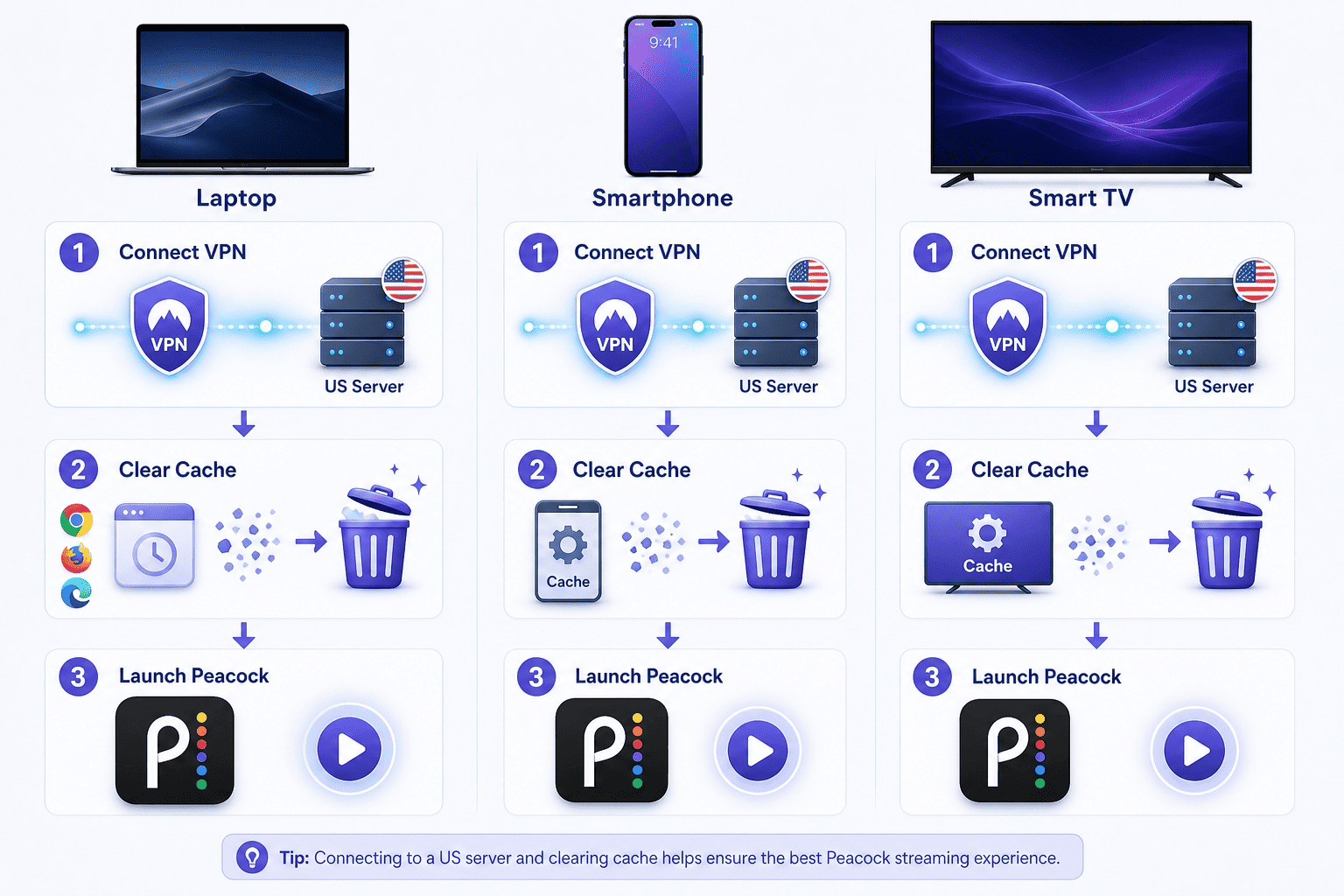
Getting Peacock working through a VPN is usually straightforward, but the order matters. If you open the app before the VPN connection is active, or you pick an overloaded server, you are more likely to hit a location error. Most problems are fixable in a minute or two once you know the routine. If you want to watch Peacock TV from abroad, the same basic method applies, but careful server choice matters more.
The steps below are the method we use to watch Peacock and stream Peacock reliably across desktop, mobile, and TV devices. Keep it simple: pick a tested provider, install the right app, connect first, then open Peacock. If one server fails, do not assume the whole service is broken.
Step 1: Choose a VPN With Working US Servers
Start with a VPN for Peacock that has a track record of working on US streaming platforms. That means more than just having a US flag in the app — you want a provider with enough servers and enough city options to recover quickly if one VPN server is blocked. Peacock TV does not treat every address range the same way, so depth matters.
NordVPN, ExpressVPN, and Surfshark all gave us repeatable access to Peacock in testing, while weaker options needed too much trial and error. A free VPN is rarely the right starting point: free plans often rotate IPs poorly, which makes blocks more common and speed less stable. A reliable VPN should also be able to access Peacock without constant manual work.
Step 2: Install the App on Your Device
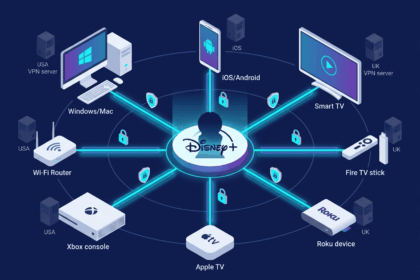
Once you pick a service, download and install the official app on the device you plan to use. Most major providers support Windows, Mac, iPhone, iPad, Android, Fire TV Stick, and other common platform types, with extra apps or setup guides for smart TVs and routers. Sign in, finish the basic prompts, and let the app update if needed. An old version can cause connection issues, buggy server lists, or trouble with streaming features.
For televisions that do not allow full VPN apps, check whether the provider includes Smart DNS — a rerouting tool that helps some streaming devices use a US location without a native app installed. That is especially useful if you want to sign up on one account and later watch Peacock TV on a living room screen.
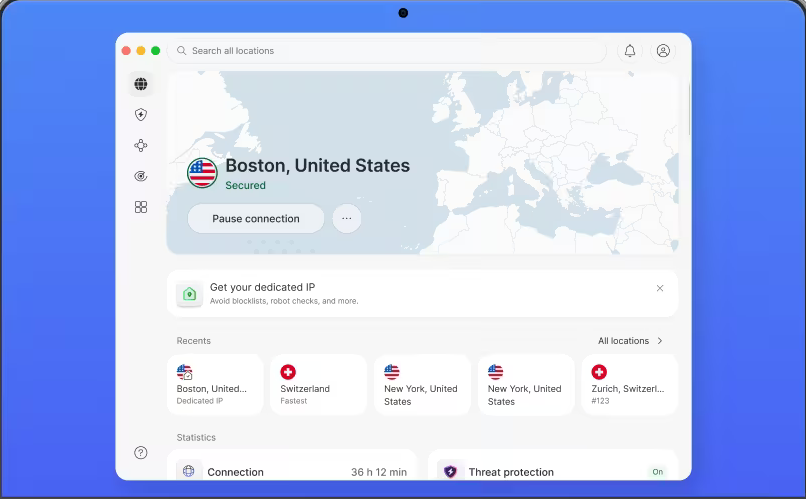
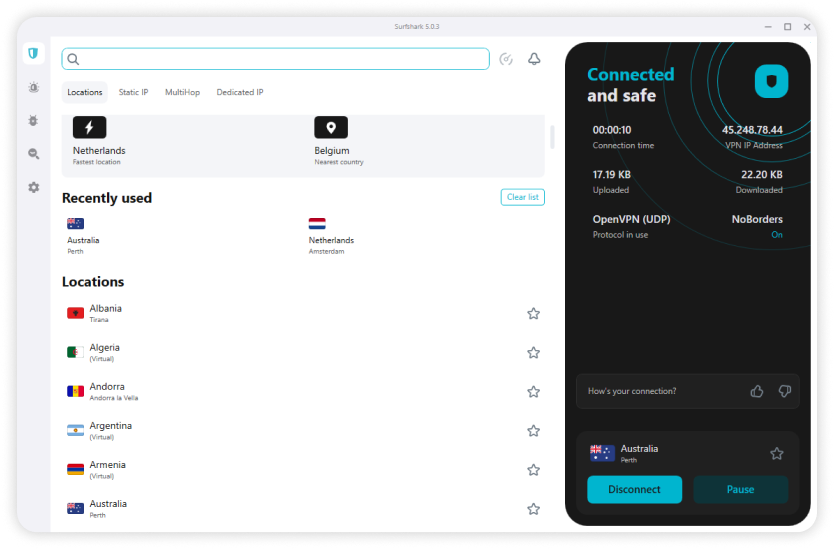
Step 3: Connect to a US Location
Before you open Peacock, connect to VPN first and choose a US location. New York is a common starting point, though it is not the only useful option: Chicago, Los Angeles, and other cities can work just as well when one location is overloaded. The goal is a server with a clean enough IP address reputation to access Peacock reliably.
Keep the VPN running in the background while you stream Peacock. Avoid switching Wi‑Fi networks or toggling the app off mid-session. If playback stalls or the service sends you back to the website with an error, disconnect, reconnect, and try another server. The best results usually come from a fast connection on a server with plenty of headroom and fast speeds.
Step 4: Clear Cache and Launch Peacock
If Peacock still thinks you are in the wrong place, clear your browser cache, cookies, or app storage before trying again. Old location data can stick around longer than you would expect, especially if you used Peacock recently without the VPN.
After clearing that stored data, fully close the app or browser, reopen it, and sign in again. Test with a short clip before committing to a full movie or live event. Successful playback for two or three minutes without a proxy warning means your setup is working. If not, move to another US server and repeat the same order: connect, relaunch, test, then watch Peacock content normally. For the smoothest streaming experience, do not rush this part.
How to Choose the Best VPN for Peacock TV
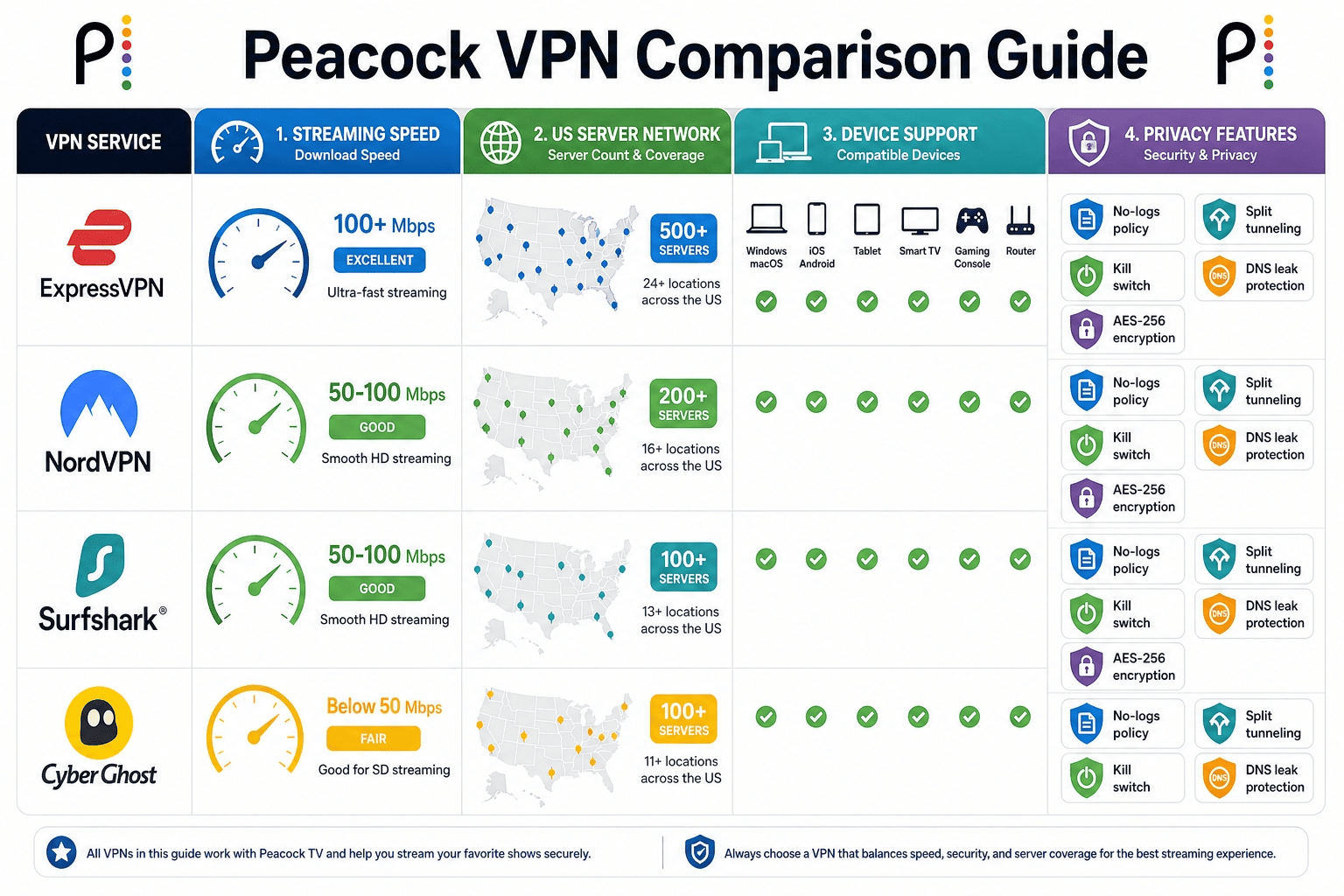
A good VPN for Peacock is not just a general-purpose privacy app with a US flag next to a map. Peacock TV can be selective about which servers it accepts, and the difference between a smooth stream and a proxy error often comes down to network quality, app design, and how quickly a provider replaces blocked IP ranges.
We recommend judging services on four practical criteria: streaming performance, US coverage, device support, and privacy and security basics. Price matters too, but only after the service has cleared the first hurdle: reliable Peacock access.
Streaming Speed and Stability
Speed is the first thing most readers notice, and for Peacock it deserves the attention. A slow VPN can still load the website, but live channels, sports, and HD video expose weaknesses quickly. Buffering, startup lag, and sudden quality drops usually point to crowded servers or a shaky connection rather than a Peacock problem.
Providers that hold speed well on US routes and reconnect cleanly if the line blips are the ones worth recommending. For live sports, latency matters too. Strong speed and low dropout rates matter more than fancy extras when you want to access Peacock content without constant interruptions. When comparing options, look at download speed, not just marketing claims.
US Server Network and City Coverage
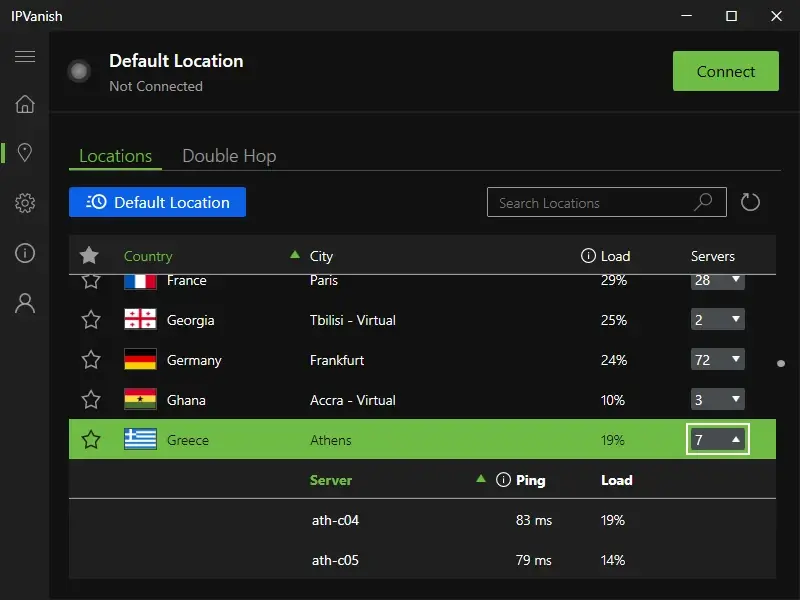
More US servers usually means more ways to recover when one route stops working. A provider with only a handful of US endpoints gives you fewer options if Peacock blocks one IP address pool. Broader city coverage also helps when a specific location is overloaded or temporarily less reliable.
Meaningful US choice matters — not just a generic “United States” button. Being able to hop between New York, Chicago, Los Angeles, or another city improves your odds of finding working access to Peacock. A wider server network also spreads user traffic better, which can help preserve speed during busy evening hours.
Apps, Device Support, and Simultaneous Connections
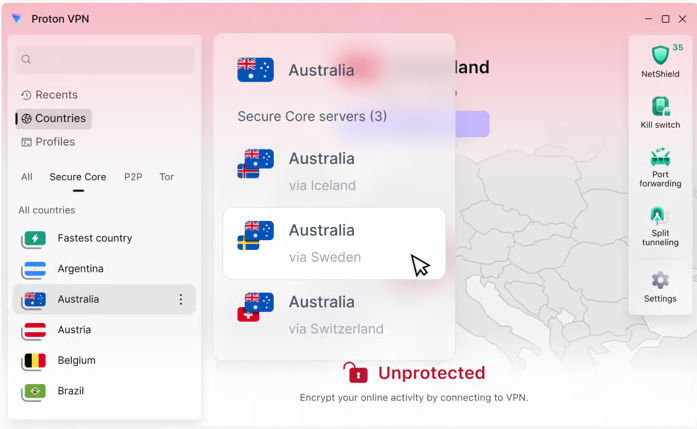
The best service on paper is less useful if the apps are clumsy or your devices are poorly supported. Peacock viewers often switch between phones, laptops, tablets, and TV platforms, so the VPN should make that easy. Clear apps, quick server search, and reliable login handling save time when you just want to press play.
Simultaneous connections matter if more than one person in your home uses the subscription. Some providers limit how many devices can connect at once, while Surfshark offers unlimited simultaneous connections on one plan. That can be a real value advantage if you need Peacock access alongside other streaming apps across the household.
Privacy Features and Refund Policies
Streaming is the main goal here, but privacy and security still count. We prefer providers with a clear no-logs stance, a kill switch that cuts internet traffic if the VPN drops, and leak protection that helps keep your real location from slipping out through DNS or browser requests. Those features are not glamorous, but they are part of a trustworthy service. DNS leaks can undermine even a strong VPN if the settings are careless.
A money back guarantee matters almost as much. Peacock results can vary by device, home network, and location, so a refund window gives you time to test safely. A 30-day money back guarantee or similar 30-day money back guarantee lets you try the app, compare servers, and decide whether the price fits your plan without taking a blind gamble. If you sign up and it does not fit, a year plan is only worth it when the service actually works for you.
VPN Not Working with Peacock TV: Troubleshooting and Fixes
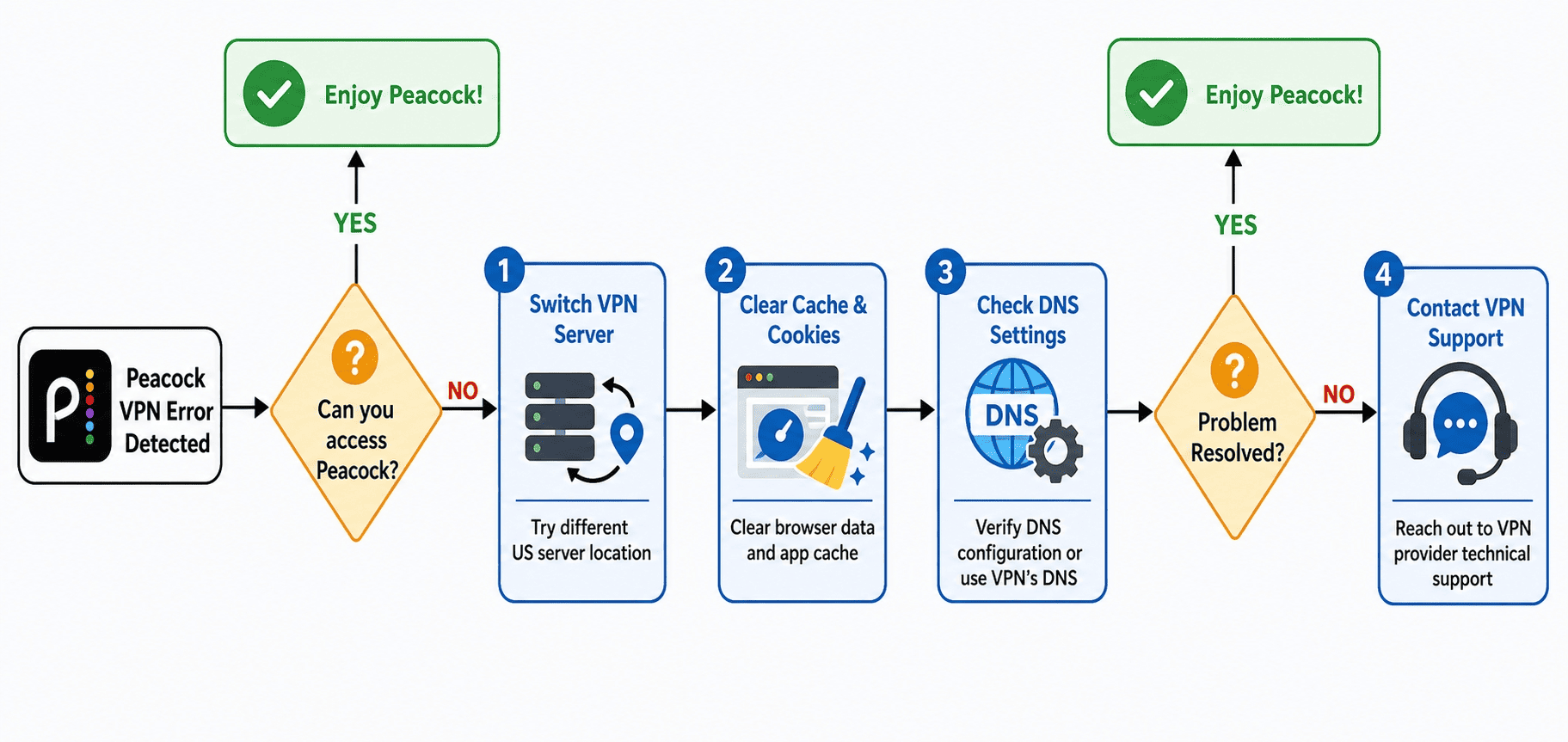
Even good providers hit rough patches with Peacock. Streaming services regularly update detection systems, and some servers get flagged faster than others. A sudden VPN not working error does not always mean the service failed outright — often you just need a cleaner route, a reset, or a different device setting.
Work through the fixes in order. Change one thing at a time, then test again. That makes it easier to spot whether the issue is the VPN server, cached location data, DNS leakage, or an account mismatch tied to the app or website.
Switch to Another US Server
The first fix is also the most effective: switch to another US server. Peacock may block one group of IPs while leaving others untouched, so changing location can restore access to Peacock quickly. Starting with New York and moving to another East Coast city or a central option often does the job — different servers carry different IP address ranges, and that frequently makes the difference.
Fully disconnect before reconnecting, then close Peacock, reopen it, and test again. A half-finished connection can leave the old route in place, which defeats the point of switching. The best providers make this easy with searchable server lists and favorites, but even then it may take two or three tries during busy periods.
Refresh the App, Browser, and Device Cache
Changing servers without clearing cached data sometimes leaves the problem in place. Peacock can hold onto cookies, app cache, or browser data that still points to your previous address, triggering blocks even when the connection routes correctly through the VPN.
On a browser, clear cookies and cached files for the website. On mobile or TV apps, clear app storage if the platform allows it, then restart the device. Once the cache is gone, reconnect to the VPN, open Peacock again, and test playback from scratch. That reset solves more Peacock errors than many users expect.
Check for DNS, GPS, or Account Mismatch Issues
Some devices reveal location in more than one way. Your VPN may show a US IP address, but DNS requests, GPS signals, or platform-level location settings can still point elsewhere, limiting access to Peacock even when the selected server looks fine in the app.
Check that your VPN is handling DNS properly and that no other location service is overriding it. On phones or tablets, disable precise location for Peacock if the platform allows it. On browsers, deny location permission for the site. If the problem continues, sign out of your Peacock account and sign back in after reconnecting. An account session sometimes sticks to an earlier location longer than it should.
When to Contact Support
After trying several US servers, clearing the cache, and checking for location leaks, contact customer support. Good VPN support teams can usually recommend a working Peacock server or confirm whether a certain location is under temporary blocks. Live chat is the fastest route if the provider offers it.
Be specific when you ask for help. Mention the device, app version, protocol, and the US city you tested. If multiple locations fail and support cannot offer a useful workaround, treat that as a sign about the service itself. A Peacock VPN should not require detective work every time you want to watch Peacock.
Can You Use a Free VPN for Peacock TV?
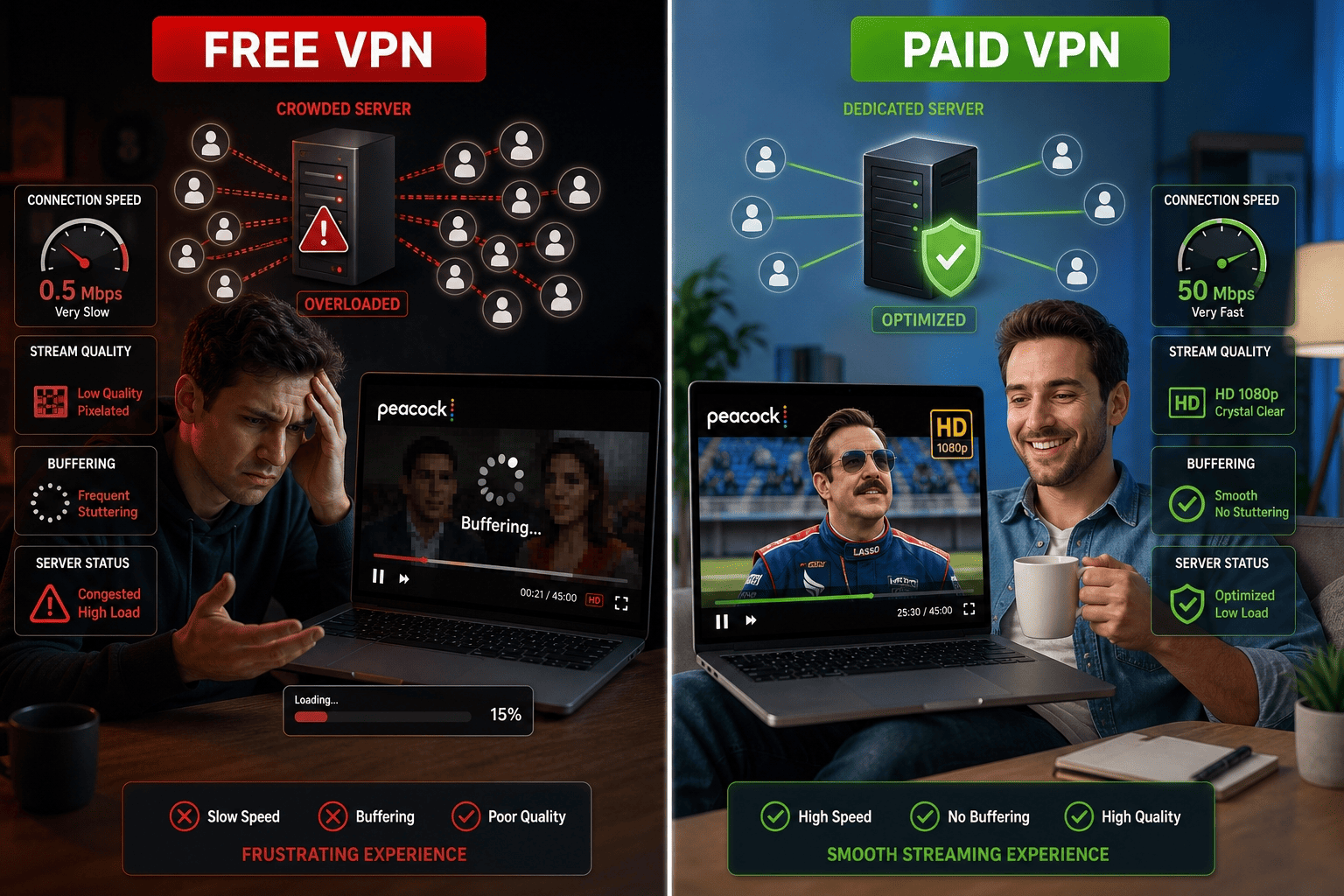
A free VPN is rarely a good Peacock VPN. The limits that make free plans cheap also make them weak at streaming: fewer servers, slower speed, stricter data caps, and IP ranges that get blocked more often. For reliable Peacock streaming, paid options with a money back guarantee are the safer test — you can always cancel if the service does not fit. Even a free trial from a premium provider is usually better than a random free plan.
Why Free Services Usually Struggle
Most free services run on smaller networks, and that creates predictable problems. Too many users pile onto too few servers, so speed drops and buffering follows. For Peacock TV, overloaded infrastructure is a bad match, especially if you want live content or HD playback without interruptions.
Blocked IPs compound the issue. Because free plans funnel a large number of people through the same address pools, those ranges are easier for platforms to identify. A free VPN may work for basic browsing one day and fail to unblock Peacock the next. Stable access requires consistent IP reputation, which free tiers rarely maintain. Some users ask how to bypass Peacock blocks with a free app, but in most cases the answer is simple: you usually cannot do it reliably.
Hidden Limits to Watch For
The headline price of zero can hide a lot of restrictions. Some free plans cap monthly data so tightly that you run out after a couple of episodes. Others limit you to a handful of locations, which is a problem if none of them work well for Peacock. Slow or nonexistent support is common too, which leaves you doing all the troubleshooting alone.
There are also less visible trade-offs: ads, weaker security features, and unclear logs policies. If a service does not charge money, it may look for value somewhere else. Read the privacy policy carefully before entering an email address or credit card for a so-called upgrade path. A trustworthy VPN providers page should make those limits obvious.
Safer Paid Alternatives With Refunds
A better approach is to use a low-cost paid plan and treat the refund window as your test period. Many of the best VPNs include a money back guarantee, often a 30 day money back guarantee, which gives you time to check Peacock on your own devices and home network. That is more useful than relying on a free VPN that may never deliver reliable access. A low-risk free streaming test is possible when the provider offers a refund policy instead of locking you into disappointment.
This route also gives you better apps, stronger security features, and real customer support if something breaks. The day money back or day money back guarantee model reduces the risk. If the service does not fit your Peacock subscription needs, cancel within the back guarantee period and move on with better information. That is the smarter way to sign up when you want to watch Peacock outside your normal region.
Where is Peacock TV Available?
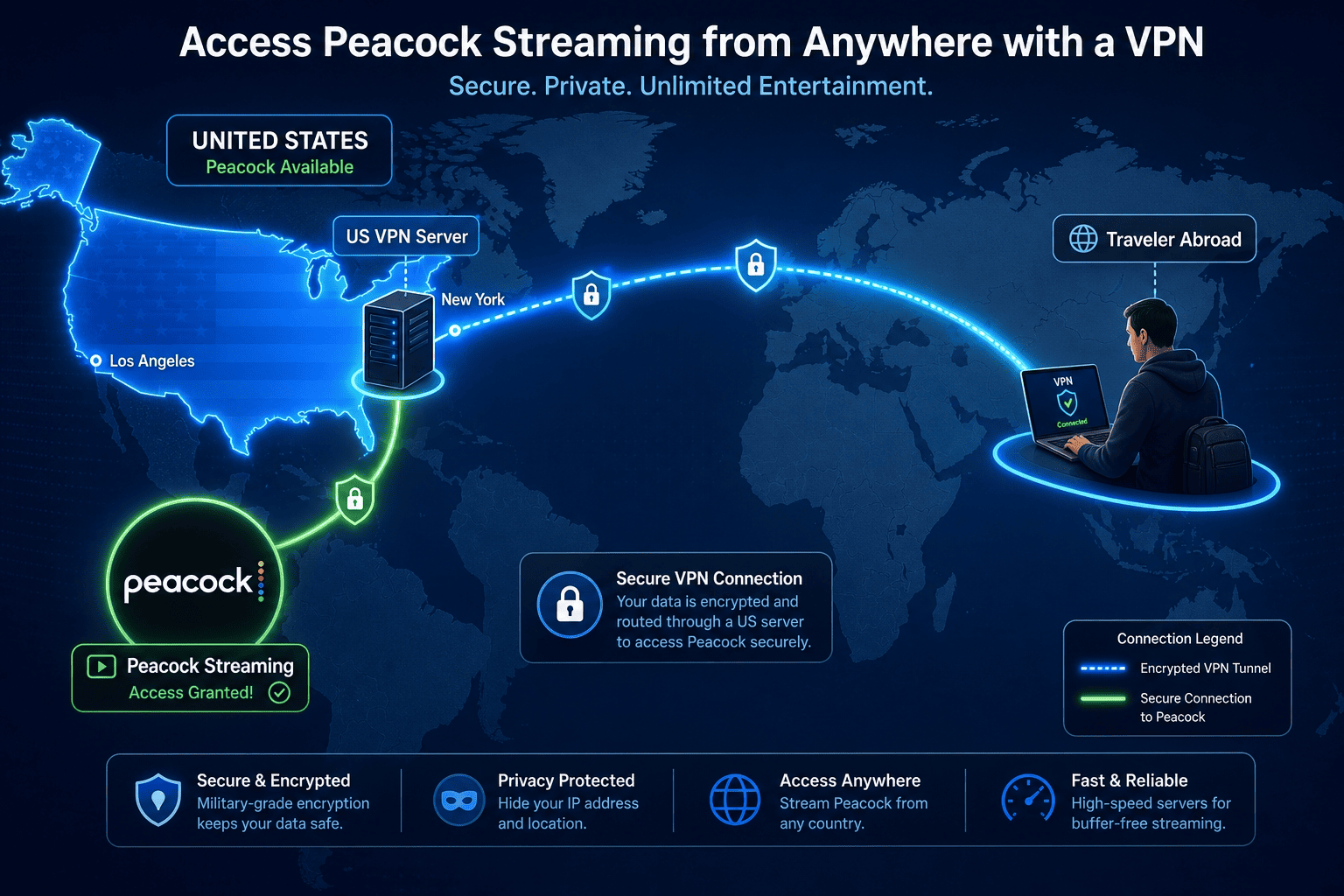
Where is Peacock TV available? At its core, Peacock is a US-focused platform, and that shapes how it handles location checks, account access, and supported playback environments. Your physical location, selected server network, and device platform can all affect whether the website or app loads content normally.
For most users, the practical takeaway is simple: Peacock access is most straightforward inside the United States, and more variable outside it. That is why travelers often turn to a VPN when they want to keep using a paid subscription abroad.
Availability in the United States
In the United States, Peacock is available through its normal app and website flow, subject to the plan you have and the content rights tied to that plan. The main model is domestic access, which is why US location checks matter so much. Some regional NBC content can vary, and local rights may affect what appears in one area versus another.
Using a VPN for Peacock inside the US, server choice may still influence how smoothly specific content loads, particularly regional or live programming tied to a specific market.
Traveling Abroad and Temporary Access
Outside the US, Peacock access often becomes less straightforward because the platform checks your location before loading streams. Travelers who want to access Peacock from a hotel, airport, or temporary rental often use a VPN with US servers to make the service think they are back home. If you are trying to Peacock outside the country, a stable connection matters more than ever.
The choice of server matters here. A crowded or already flagged location may fail, while another US city works on the next attempt. A deeper server network is more useful than a single token endpoint precisely because you need fallback options.
Device and Platform Notes
Your platform also affects setup. Watching through a browser on the website is usually the easiest path for quick testing, while mobile apps and smart TV apps may hold onto location data more aggressively. Some TVs do not support full VPN apps at all, which is where router setup or Smart DNS can help.
Peacock availability is not just about country rules. The app, device, and chosen location all interact during the connection process, and a mismatch at any point can trigger an access error. That is why the same service can feel different on mobile devices versus a TV box.
Peacock FAQ
Which VPN works best with Peacock TV?
Can Peacock detect and block VPNs?
Is a free VPN enough for Peacock?
Can I watch Peacock on a smart TV with a VPN?
What should I do if Peacock says I’m outside the US?
Does Peacock work with every US server?