

This guide shows how to get US Netflix with a VPN, what you need before you start, and how to fix the most common problems if the library does not change. When your goal is to watch American Netflix from another country, the process is usually quick: pick a VPN with proven Netflix access, connect to US servers, refresh Netflix, and confirm that your IP now appears in the United States.
You still need an active Netflix account, a supported device, and a stable internet connection, but you do not need advanced technical knowledge. In most cases, the full process takes a few minutes, not days or months, and the trick is choosing a VPN service that can still access American content consistently.
How to Watch US Netflix
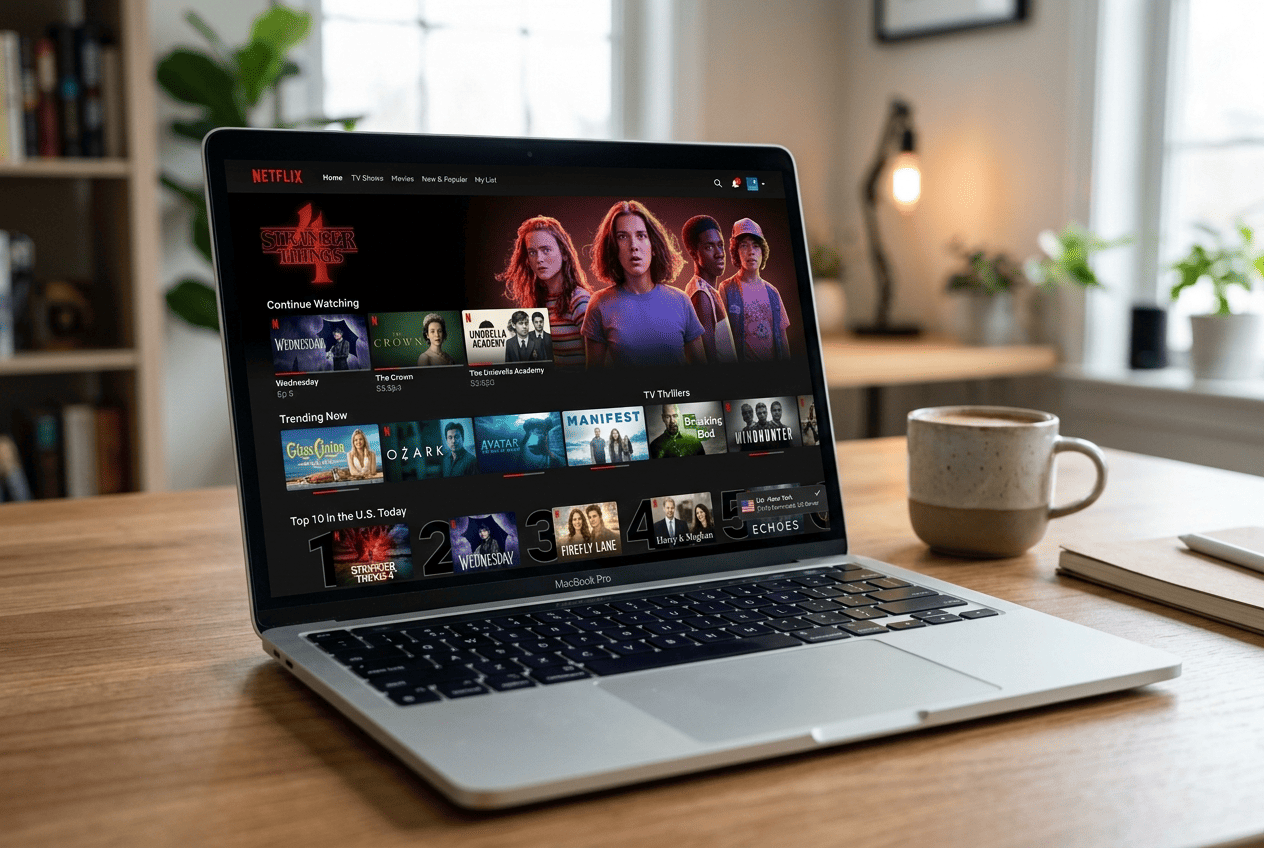
When you want to watch Netflix with the US library instead of the one assigned to your country, the basic process is straightforward. Install a VPN app, connect to a US location, then reopen Netflix so the website or app loads the American Netflix catalog. That is the core method behind how to watch US-only titles anywhere in the world.
Netflix checks location information from your IP, browser data, app data, and sometimes other signals tied to your device. A weak service may connect, yet still fail to access American titles because its servers are already known and easy to block. A stronger VPN sets you up with cleaner US endpoints, steadier speeds, and a smoother process from sign-in to playback.
Step 1: Choose a Reliable VPN
Start with a VPN that has a track record of working with Netflix, not just one that advertises streaming in broad terms. To watch American Netflix reliably, you need a provider with fast US servers, stable apps, and enough server variety that one blocked location does not end the attempt. Speed and server rotation matter more than feature lists.
Look for a service with dedicated streaming support or at least good US coverage across several cities. When the app lets you sort by fastest server or streaming-optimized servers, that usually makes the process easier. A polished app also matters on every device, whether you stream on a laptop, tablet, phone, or TV.
Free VPN options are worth avoiding here. They are often too slow for HD content, more likely to be block-listed, and less predictable over long sessions. Some also ration data so tightly that a single movie can burn through the allowance in days. For uninterrupted American shows, a paid VPN service typically comes with a money back guarantee or back guarantee window if it does not work for your setup.
Step 2: Connect to a US Server
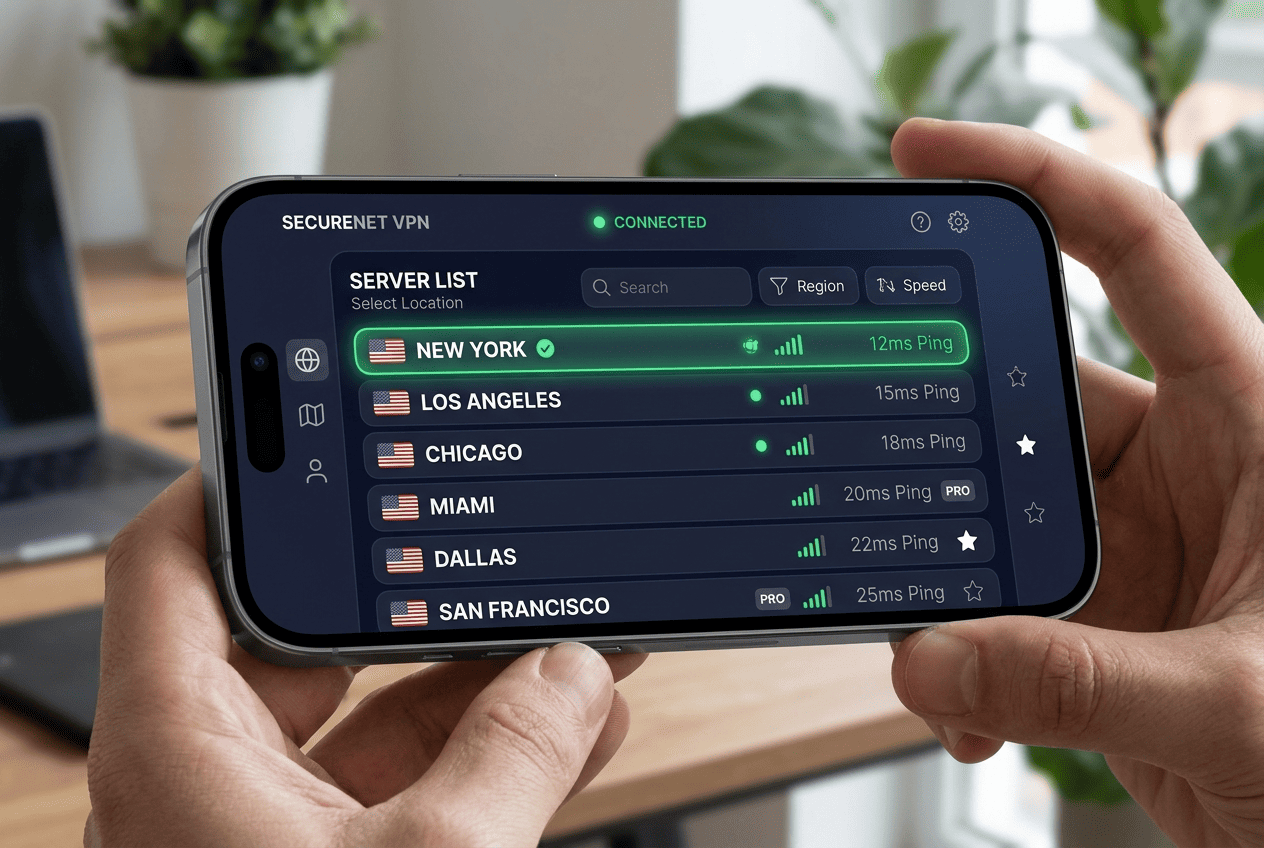
Open the VPN app and connect to a server in the United States before you launch Netflix. Should your provider offer several US cities, start with a major location and switch later only if needed. Many apps label the best servers for streaming, which removes some guesswork and helps you access American content faster.
Once connected, verify that the VPN is active. Most apps clearly show a connected status, a new IP, and the selected country. Netflix may keep showing your local library if the tunnel was not fully established, so confirm the connection before opening the site.
Should Netflix still load the wrong library, disconnect and try another US server. This is normal. Streaming platforms constantly update their detection systems, so a server that worked months ago may not be the best choice today. Good providers rotate servers and refresh IP sets to stay ahead of that block cycle. The trick is not to overthink it: change servers, reconnect, and test again until American Netflix appears.
Step 3: Refresh Netflix and Start Streaming
After you connect to the VPN, reopen Netflix so it requests fresh location data. When you were already signed in, log out, close the app or browser tab, then sign in again. This step often solves the issue when people can connect to a US server but still cannot watch Netflix with the American library.
When the catalog still has not changed, clear cookies in your browser or restart the Netflix app on your device. Old session data can keep feeding region information back to the website. On mobile, a quick app restart is often enough; on desktop, clearing cached data is the safer move.
You can also check your IP on an external website before returning to Netflix. In practice, if it shows a United States location, the process worked on the VPN side. At that point, open Netflix and try a title known to be in American Netflix. When the title page loads and the video starts, you have confirmation that you can now watch American Netflix through the US library. For more details on changing your Netflix region, read here.
What You Need Before You Begin to Watch Netflix
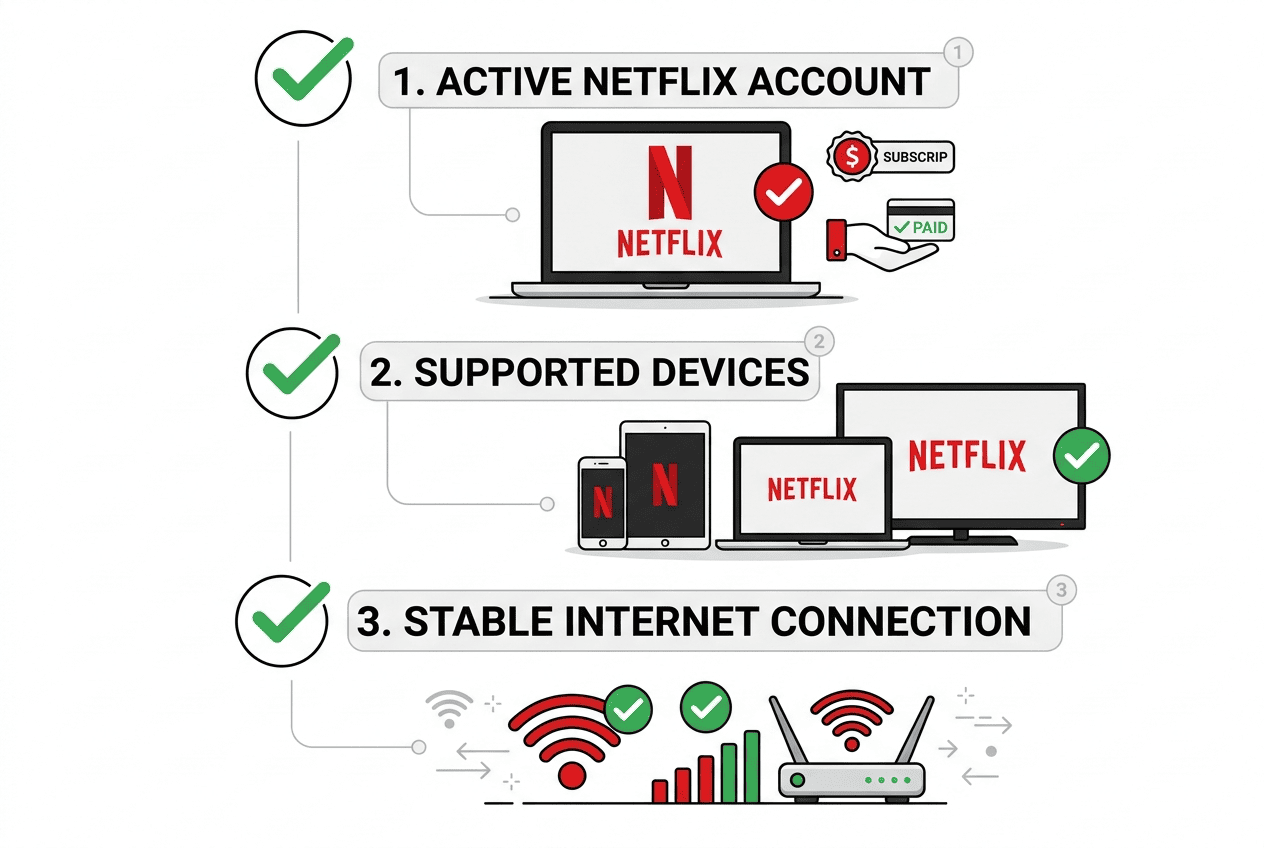
You need three basics before you start. First, keep an active Netflix account. A VPN does not replace the streaming subscription; it only changes the apparent location Netflix sees when you connect. Without the account itself, there is nothing to access.
Second, use a compatible device that supports your chosen VPN app or another supported setup method. That could be a Windows PC, Mac, phone, tablet, streaming stick, or router. Some platforms make the process easier than others, especially when the app is available directly in the store.
Third, make sure your internet connection is stable enough for streaming. Even the best VPN cannot manufacture speed if your base connection is already struggling. However, if your internet is unstable, buffering and quality drops will appear long before Netflix becomes the problem.
Common Mistakes That Block Access Anywhere
The most common mistake is using the first US server you see and assuming every server works the same way. In practice, some locations are better than others, and one bad endpoint can trigger a block or leave you stuck with the wrong library. Switching servers is often the fastest fix.
Another frequent issue is leaving old browser or app data in place. Cookies, cached information, and even saved location data can tell the site more than your new IP does. For best results watching American content from anywhere, clear that old data before assuming the VPN failed. This applies on the website and in mobile apps.
Finally, keep both Netflix and the VPN app updated. Outdated software can interfere with the connection process, create login glitches, or expose your real country through stale data paths. A user may think the service stopped working, when in fact the problem is just an old app build on the device.
Recommended VPNs for US Netflix
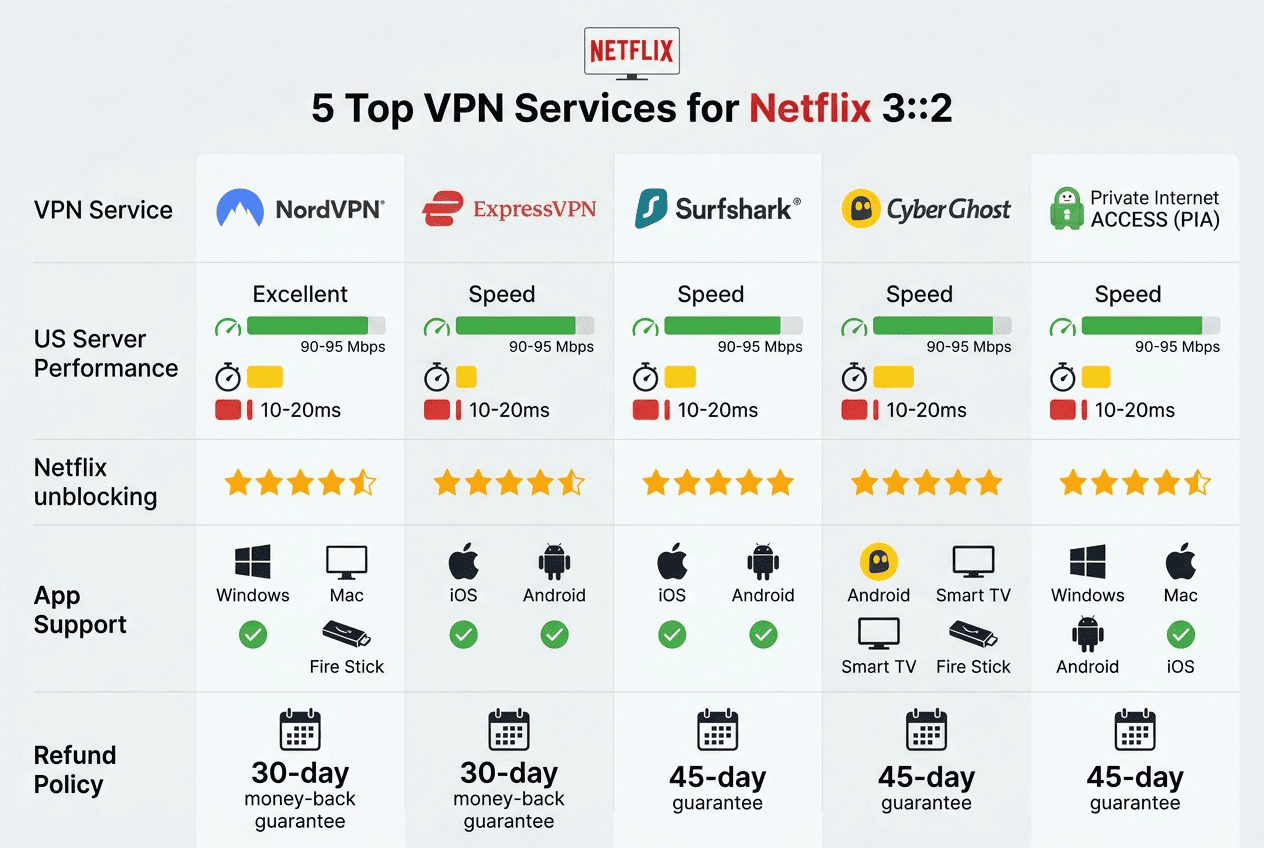
Choosing the right provider matters because streaming access can change quickly. One VPN service may open American Netflix with little effort, while another connects fine but fails to access American titles at all. Speed matters, but so do server rotation, app reliability, and how easy it is to recover when Netflix starts to block a location.
Price also plays a role. Some readers want the best VPN regardless of cost, while others just want a practical option with a money back guarantee and simple apps. Either way, keep your Netflix account, device support, and preferred platform in mind before you decide.
How to Compare the Best VPN Service for Netflix
Compare each best VPN option on four basics: speed, consistency with US servers, app quality, and refund terms. A good VPN service should access American content without constant errors, work smoothly across more than one device, and include a money back guarantee or clear back guarantee policy so you are not risking money if it cannot unblock your Netflix account.
Why Use a VPN for US Netflix
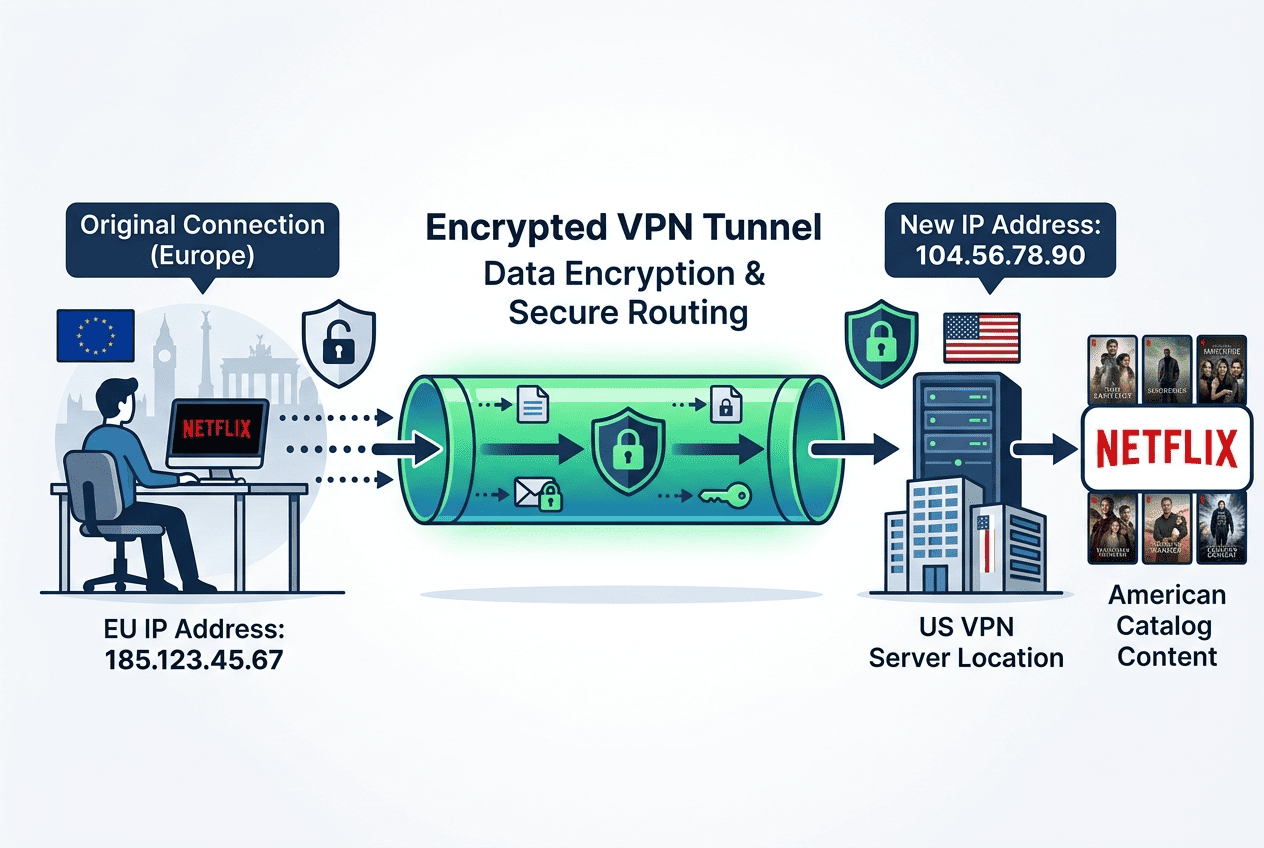
A VPN is useful here for one simple reason: Netflix libraries change by country, and the US catalog often includes different content than local versions. When you travel, live abroad, or want to access American Netflix from another part of the world, a VPN changes the IP Netflix sees and can help you watch Netflix with the library you want instead of the one you were assigned automatically.
There is also a secondary benefit. A VPN does not just help with access; it masks your IP from the website and encrypts your traffic on the way, which can make streaming on public Wi-Fi less exposed. In reality, not every service performs equally well, but a strong one can balance privacy, speed, and reliable playback better than a bargain-bin option.
Access More Shows and Movies
The biggest reason people use a VPN for Netflix is access to a different catalog. American Netflix often has shows, movies, or release timing that differ from what appears in another country. When you want to watch American titles while traveling, a US connection can help Netflix present that library instead.
This is especially useful for long trips, temporary work assignments, or months spent abroad. Instead of seeing a reduced local lineup, you can access American content through a US server and keep your usual viewing habits closer to home.
Improve Privacy While Streaming
A VPN improves privacy by masking your real IP address from the website and from other parties on the network path. Your traffic moves through an encrypted tunnel, which means casual observers on public Wi-Fi have less visibility into what you stream or where you connect. However, note that a VPN covers your IP — Netflix can still read browser data, app data, and device signals it collects separately, so the VPN alone does not make you invisible to the platform.
That added privacy can matter at home as well, especially if you prefer to limit exposure of your browsing data across the wider internet. It keeps your viewing data private from your ISP and other network observers while you watch Netflix.
Bypass Regional Detection Issues
Netflix usually determines your region from your IP, which is why the local library appears by default. A VPN changes that visible location and can help you access American Netflix by presenting a US-based IP instead of one from your current country.
Quality matters here. Detection systems evolve, and some servers get flagged faster than others. A trusted provider with better rotation and cleaner IP sets is simply more likely to keep working. That is why the difference between a random app and a proper streaming VPN service is hard to ignore.
When a VPN Makes the Most Sense Anywhere
A VPN makes the most sense when you travel often, split your time across countries, or want a consistent way to watch American Netflix on more than one device. It is also useful for expatriates who want familiar content without changing habits every few days.
The setup is especially practical when your provider supports phones, laptops, tablet apps, and routers under one account. In that case, the process scales well and gives you one service you can use almost anywhere.
Device Compatibility and Setup
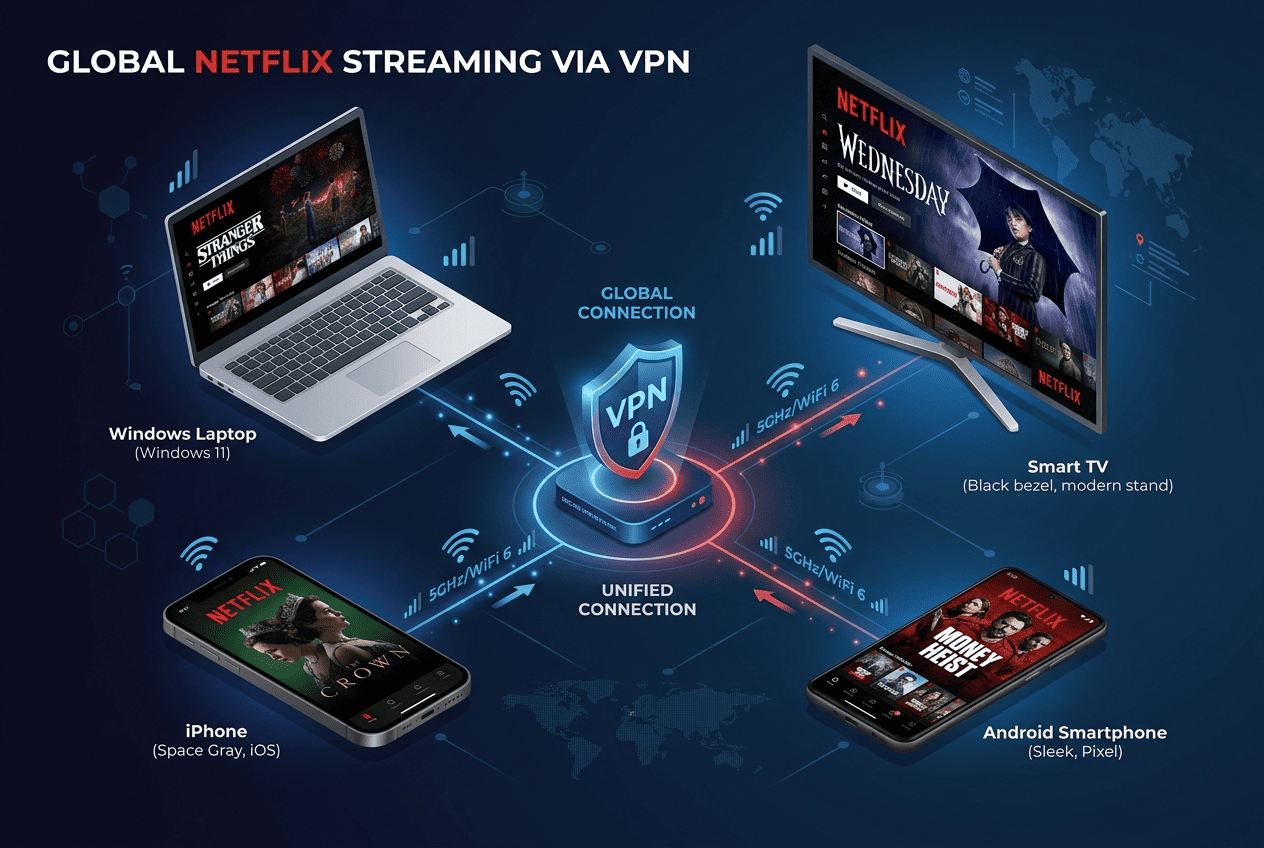
Device support changes how easy this process feels in real use. A VPN that works well on desktop but has a clumsy mobile app, limited TV options, or a confusing setup process can turn a five-minute task into a long one. Before you download anything, check whether your service supports the device you actually use for Netflix most often.
It also helps to think about where location data can linger. Browsers store cookies, apps cache account information, and some platforms handle VPN connections differently than others. The steps below cover the most common device types and the main points where the process tends to go sideways.
On Windows and Mac
On Windows and Mac, download and install the desktop app from the official site, sign in, and connect to a US server before opening Netflix. This is usually the simplest setup because desktop apps give you full control over servers and connection settings.
For browser streaming, restart the browser after the VPN connects so old region data does not linger in memory. When Netflix still shows the wrong library, clear cookies for the site and try again. The success signal is straightforward: the website loads US-specific content and the selected title starts playing without a location error.
On iPhone and Android
On iPhone and Android, download the VPN app from the official App Store or Google Play listing rather than from a third-party site. Open the app, sign in, and allow it to create the VPN profile on your device. That approval step is part of the normal process on mobile.
After that, connect to a US server and launch Netflix. Should the library not change, force-close the app, reconnect, and reopen it. This works on phones and tablet models alike. When everything is set correctly, the app shows US content and lets you watch American Netflix with the expected catalog.
On Smart TVs and Streaming Devices
Smart TV setup depends on the platform. Some devices support a native VPN app, while others require router installation or a Smart DNS workaround. When your TV platform does not allow standard VPN apps, router-level setup is often the cleanest trick because it covers every connected device automatically.
Streaming sticks vary as well. Some let you download the VPN directly; others need extra steps or a compatible service with better TV support. Before you start, confirm that your provider lists your exact device and setup process. That saves time and avoids trial-and-error that can stretch from minutes into days.
On Browsers and Web Players
Browsers are convenient, but they also keep a lot of stored data. For the web player, clear cookies and cached site data after connecting to the VPN, especially when the old country library keeps appearing. That stored information can conflict with your new IP.
Use a current browser version and disable extensions that may interfere with the VPN or reveal location data. Proxy add-ons, ad blockers with location features, and privacy tools that rewrite traffic can all complicate the process. Keep the setup simple, then test the website again.
Troubleshooting Access Issues
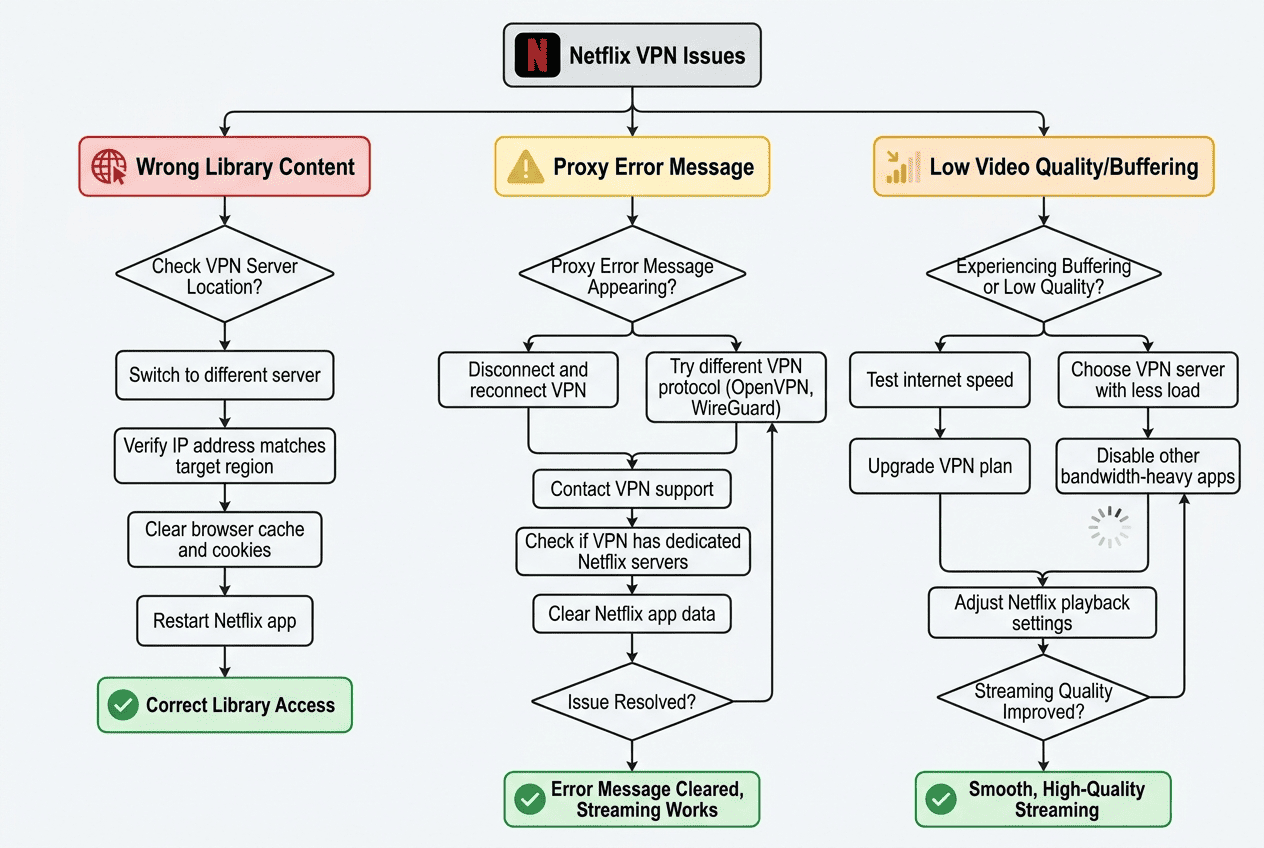
Most Netflix VPN problems come down to stale location data, a bad server, or limited speed. The good news is that the fix is usually narrow and specific. When the library refuses to change, work through one variable at a time rather than changing everything at once. That gives the user a better chance of finding the real cause without losing useful information along the way.
If Netflix Still Shows Your Local Library
Diagnosis: Netflix is still reading old region data from cookies, cached app data, or a server that did not fully switch your visible location. Fix: disconnect, reconnect to another US server, then clear cookies or restart the app and reopen the website only after the VPN is active. When the library changes, the process worked.
If You Get a Proxy or VPN Error
Diagnosis: the server IP is likely flagged, or your device is sharing conflicting location information through browser settings or system permissions. Fix: switch to another US city, turn off location permissions that the site can use, and try again. When the block stays in place, contact support and ask for servers that currently work with Netflix.
If Video Quality Is Too Low
Diagnosis: the VPN connection is working, but speed is dropping because of distance, congestion, or background data use on your internet connection. Fix: choose a faster server closer to your real location, pause large download activity, close heavy apps, and test again. When the stream stabilizes, your base speed was the limiting factor, not Netflix itself.
Legality of Watching US Netflix with a VPN
People often worry that using a VPN for Netflix is automatically illegal. In most places, that is not the case. The larger question is usually whether the streaming service permits this kind of access and how local rules in your country treat VPN use more broadly. Laws vary across the world, so it is worth checking the position where you live before you spend money.
Is It Illegal to Use a VPN?
In many parts of the world, using a VPN is legal by itself. The main issue is not the tool but the local law in your country and the rules of the service you use. When unsure, check local regulations first rather than assuming the same answer applies everywhere.
What Netflix’s Terms Mean in Practice
Netflix can try to block VPN traffic, and using a VPN may conflict with platform terms even if it is not a criminal matter. In practice, that usually means the service may refuse access to certain servers or revert you to another library, not that your Netflix account disappears overnight after a few days.
How to Reduce Risk While Streaming
Use a reputable provider with a clear privacy policy, keep the app updated, and avoid sharing account details publicly. That lowers unnecessary risk and protects your data better. A service with responsive support, stable servers, and privacy standards that keep your information secure is usually the safer choice when you want to watch American content responsibly.