


If you want the best VPN for Mexico, the short version is simple: you need reliable servers in Mexico, strong streaming results, and privacy features that do not get in the way of daily use. That matters whether you are outside the country and want a Mexican IP address for local content, or you are in Mexico and want better privacy, safer public Wi-Fi use, and steady internet access to international libraries like Netflix and Amazon Prime Video.
The top picks below earned their place because they balance speed, security, and ease of use better than the rest. NordVPN leads this list for its consistent Mexican servers, privacy and security tools, and dependable streaming performance, while Surfshark stands out on value and ExpressVPN remains the premium choice if app quality and fast speeds matter most.
2026 Shortlist for Mexico Access
NordVPN
Why it made the list
- Reliable Mexican servers and strong streaming access.
- Reliable servers in Mexico for a stable Mexican IP address
- Strong privacy and security features, including kill switch support

Surfshark
Why it made the list
- Unlimited devices at a lower long-term price.
- Very polished apps across phones, laptops, and streaming devices
- Fast speeds that help with HD and 4K streaming from Mexico

ExpressVPN
Why it made the list
- Excellent apps and consistently quick connections.
- Unlimited devices on one plan
- Lower long-term pricing than many premium rivals
Finding the best vpns for Mexico is partly about location coverage and partly about consistency. Plenty of services say they support Mexico, but that can mean anything from one crowded server to a well-managed group of servers in Mexico with enough capacity for streaming, browsing, and safer public Wi-Fi use. In practice, one VPN gives you a stable Mexican IP address and smooth Netflix playback, while another leaves you refreshing the same website and hoping the connection settles down.
The best vpns here all provide working Mexican servers, a documented privacy stance, usable apps, and a server network that is broad enough to stay useful outside a single task. Some are better for households with many devices, some lean harder into privacy, and one clearly stands out as the safest all-around pick for most users.
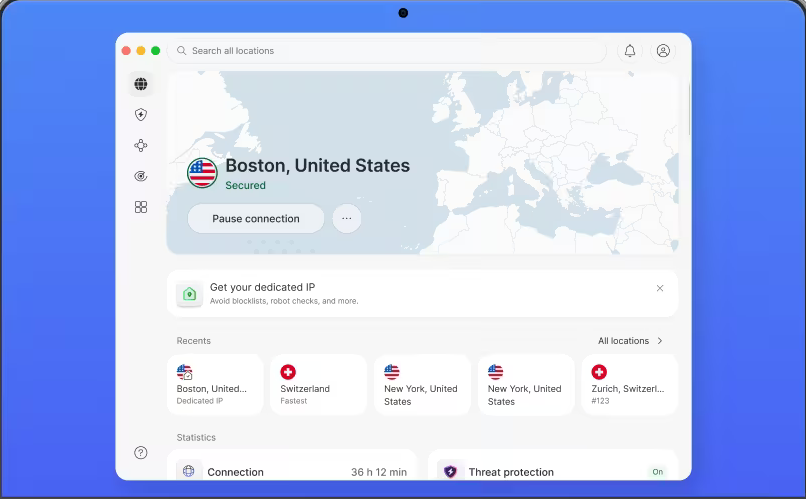

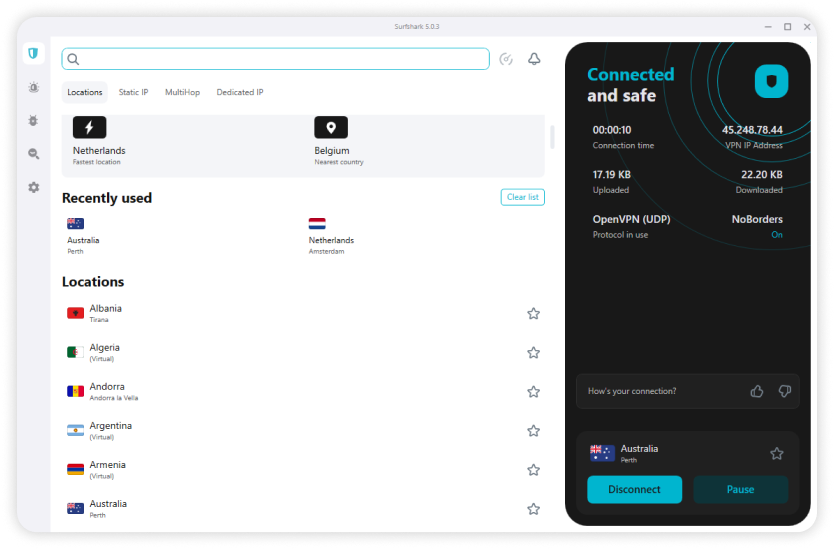


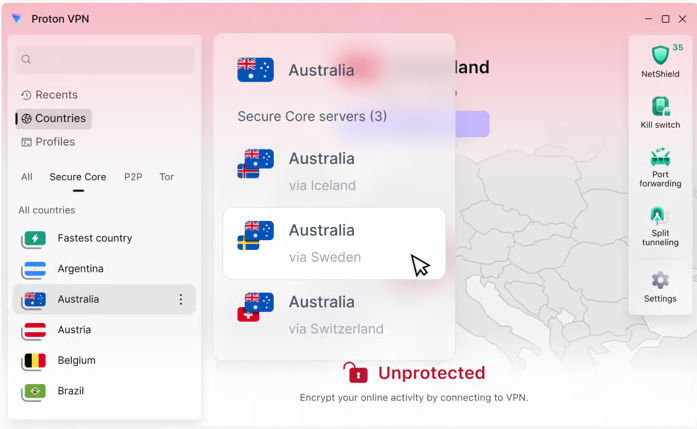
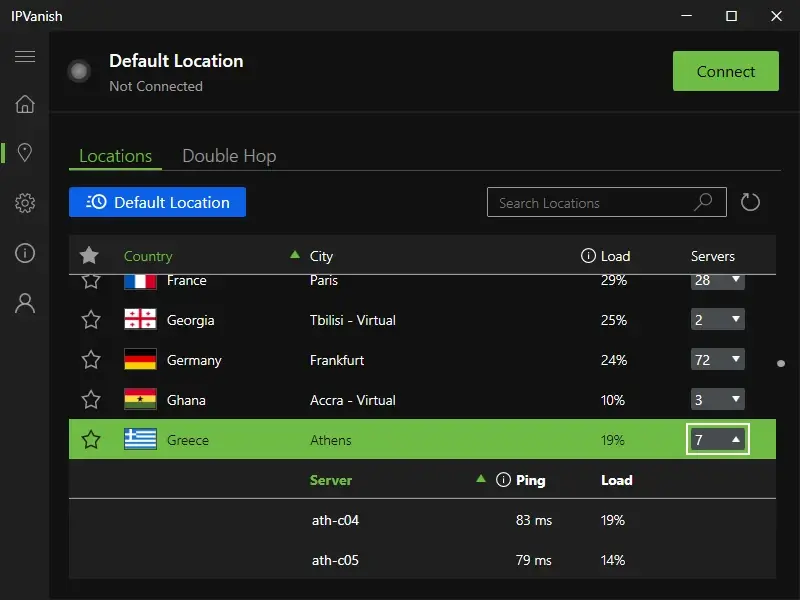
VPN Comparison and Reviews
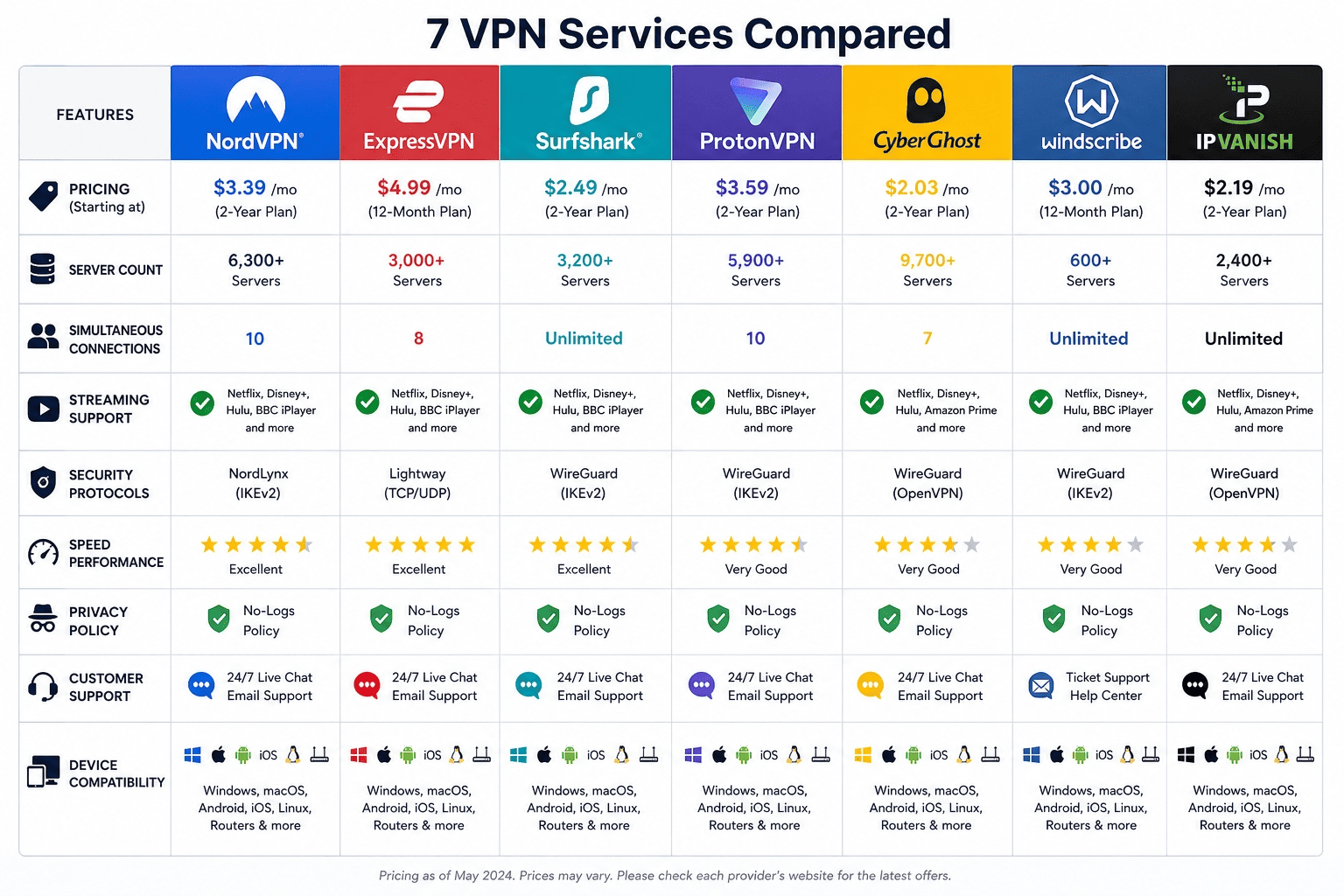
The best vpns are often close on paper, but the gaps become clearer once you look at Mexican servers, server network quality, fast speeds, and the security features that matter outside a lab result.
The main practical question is not which VPN has the longest feature list. It is which one matches the way you actually use the internet in Mexico: streaming, travel, public Wi-Fi, and multi-device coverage. That is where the comparison becomes useful.
How the Top Services Differ in Practice
The top vpns for mexico separate themselves in a few predictable ways. NordVPN is the most rounded option, combining privacy, speed, and consistent access without any glaring weakness. ExpressVPN feels more premium in its apps and setup flow, while Surfshark wins on value, especially if many devices need coverage under one plan.
Then there are the more specialized choices. ProtonVPN leans hardest into privacy and security features, which makes it attractive to readers who care deeply about transparency and a stronger logs policy. CyberGhost keeps things easy to use, which is often underrated, while Windscribe sits in a useful middle position for people focused on streaming from Mexican servers without paying top-tier prices.
The practical takeaway is simple: if you want the least compromise, start with NordVPN. If price matters most, start with Surfshark. If ease and polish carry more weight than budget, ExpressVPN remains one of the best vpns on the list.
Which One Fits Streaming, Privacy, or Travel
Use case matters more than branding. For streaming in Mexico, NordVPN, ExpressVPN, and Surfshark are the strongest picks because they combine server reach, app quality, and the ability to access major services with less trial and error. That includes local platforms, broader international content, and familiar names like Netflix and Amazon Prime Video.
For privacy, ProtonVPN deserves a harder look. Its emphasis on open-source apps, stronger transparency signals, and a more conservative approach to user data makes it a serious option for people who are less worried about squeezing out the last bit of speed. NordVPN still balances privacy well, but ProtonVPN speaks more directly to that audience.
For travel, broad coverage becomes more important than one country alone. A wide server network across many countries gives you more flexibility if Mexico is only one stop on the map. That is why ExpressVPN and NordVPN remain strong travel companions, while budget services can still work well if their mexico access is the main goal.
Mexico Server Coverage and Connection Quality
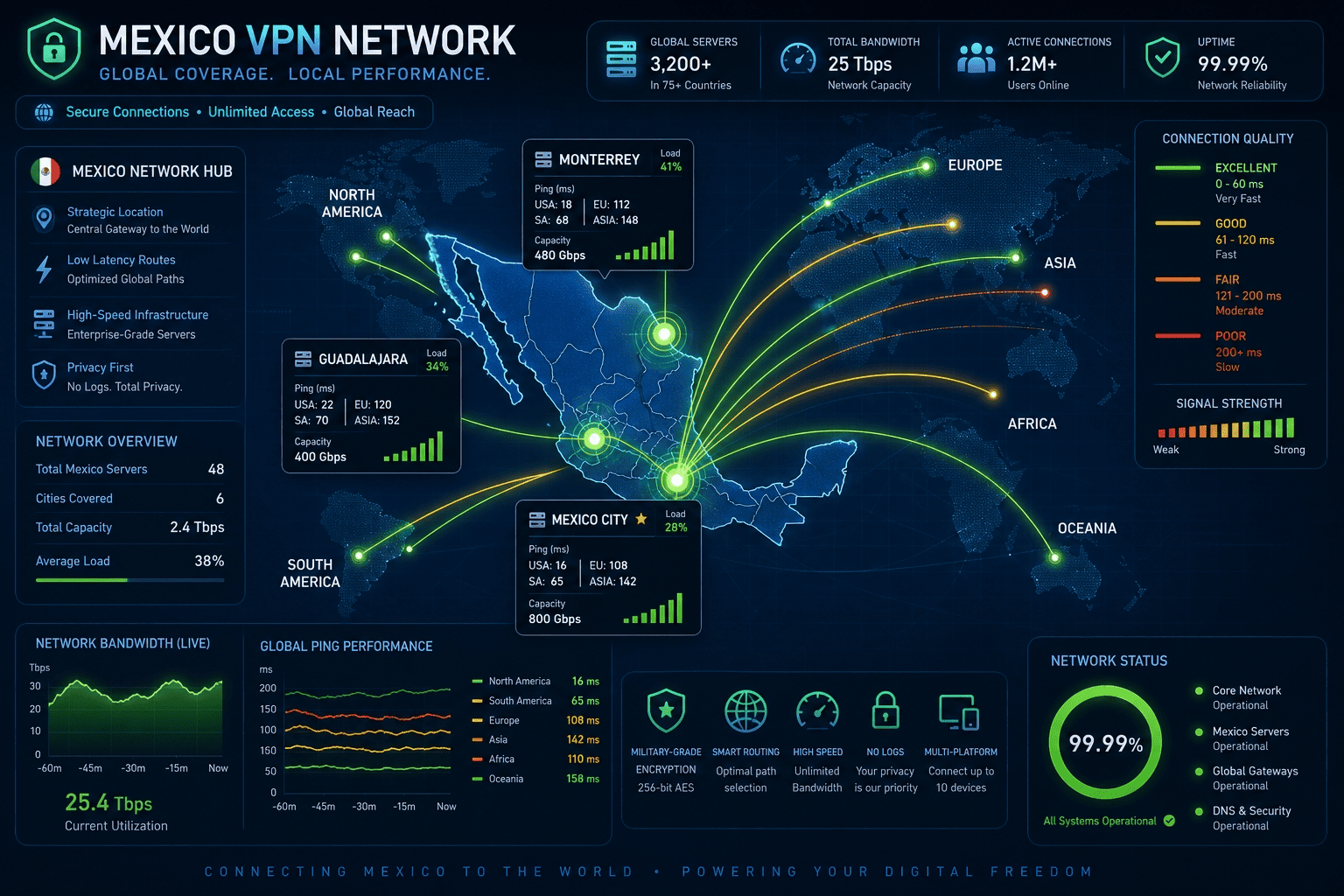
Mexico server coverage is not just a box to tick. The number and quality of Mexican servers affects latency, connection stability, and how easily you can get a functioning Mexican IP address when demand is high. A VPN with limited servers in mexico may still work, but you are more likely to run into congestion or inconsistent playback.
This is where the larger providers gain an edge. A broader server network usually means more routing options, better load handling, and fewer peak-time slowdowns. It also helps if you need a specific city or a cleaner exit point for a website that is sensitive to repeated traffic from one address. Readers often overlook this until their connection starts buffering halfway through a stream.
Connection quality is about more than raw speed. Reliability matters just as much. The best services keep your connection steady, assign a valid IP address quickly, and avoid the kind of random disconnects that make a Mexican location useless in practice.
When a Free VPN Is Not the Right Answer
A free VPN usually comes with trade-offs that show up fast: fewer Mexican servers, tighter data caps, slower speeds, and weaker support when a streaming service stops working. For basic browsing, those limits may be manageable. For regular streaming, they are not.
Privacy is another problem. The logs policy in many free services is vague, and without a paying customer base, the business model often involves handling user data in ways that do not match the promise. If the privacy policy is unclear or the data limits are aggressive, those are not small details. They define what the service actually is.
Paid services are the better answer for Mexico use because they offer more stable access, better security features, and fewer frustrating limits. If cost is the main concern, Surfshark is a stronger starting point than trying to force a free tier into a full-time role.
How to Get a Mexican IP Address
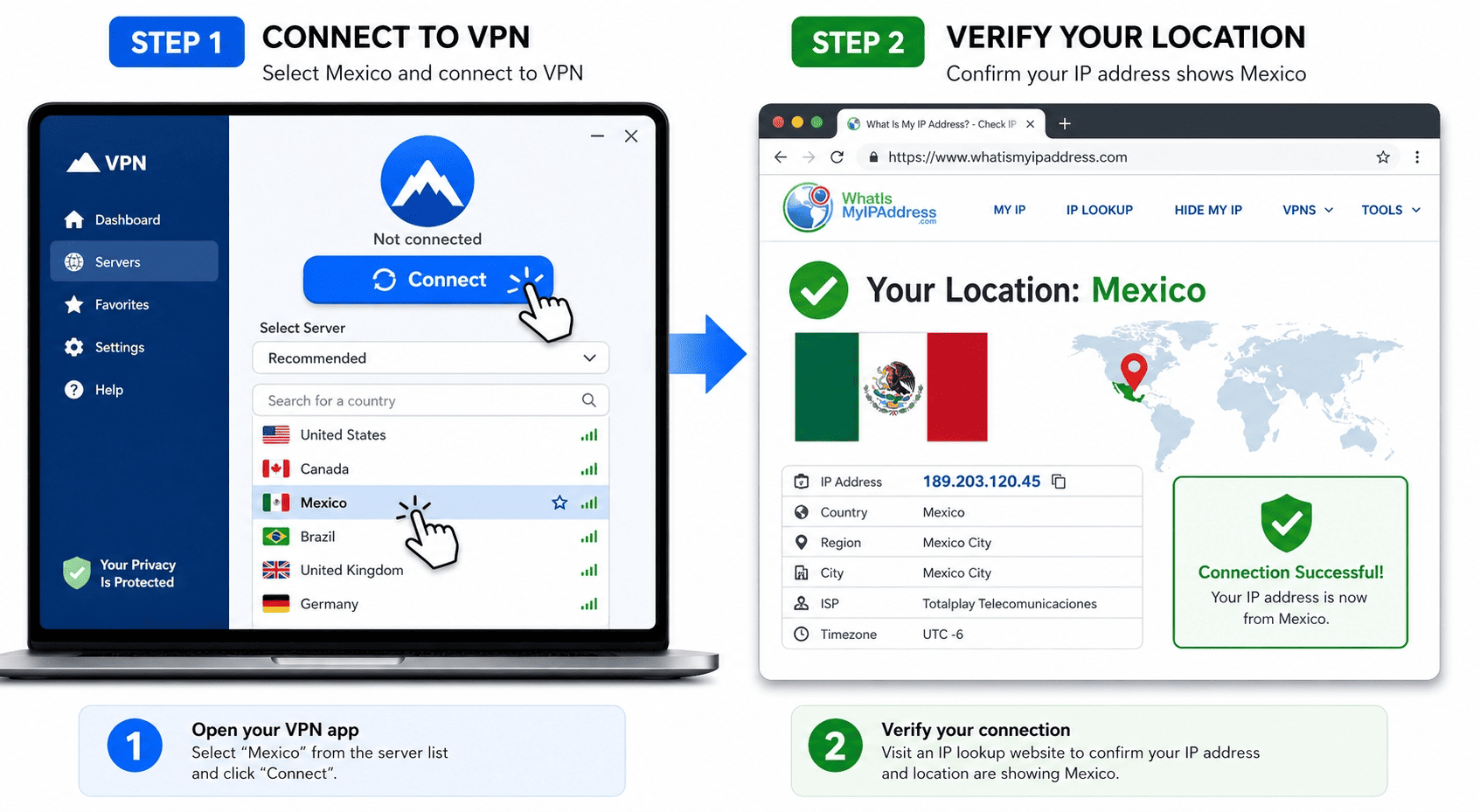
If your goal is a Mexican IP address, the process is straightforward. You pick a VPN with working Mexican servers, install the app, connect, and confirm that your IP address has changed to Mexico. The details matter, though, because a weak server choice or a rushed setup can leave you with the wrong location or unstable access.
The good news is that most leading services make this easy on Windows, phones, tablets, and streaming devices. A VPN can do the heavy lifting in the background, but you still want to know how to check your connection, verify the new address, and use tools like split tunneling if only some apps should route through the VPN.
Step 1: Choose a VPN With Mexico Servers
Start with a provider that clearly offers Mexican servers and has a good reputation for streaming and privacy. Not every service with a Mexico pin on the map performs the same way. Some have better app stability, some maintain better speed, and some are simply better at giving users a working Mexican IP address on the first try.
You should also decide what matters most before subscribing. If you mainly want local streaming access, prioritize providers that handle Mexico platforms and major international services well. If privacy matters more, look closely at the logs policy and encryption standards. Check whether the VPN offers a kill switch, which cuts internet traffic if the tunnel drops, and whether DNS leak protection is enabled by default.
Fast speeds and stable apps still matter even if your goal is only local access. A VPN can connect to Mexico in seconds, but that does not help much if the website you want loads slowly or your video stream stutters.
Step 2: Install the App and Sign In
Once you choose a service, download the correct app for your device from the provider’s official website or app store. Most top VPN apps support Windows, macOS, Android, iPhone, and other common devices, and the installation process is usually no more difficult than any other mainstream software.
After signing in, take a minute to review the basic settings. Turn on the kill switch if it is not enabled by default, and check whether the protocol menu mentions WireGuard, a modern VPN protocol designed for speed, or a custom equivalent such as NordLynx. If the app offers split tunneling, which lets you choose which traffic uses the VPN, decide whether you need it now or later.
This is also a good time to make sure your internet connection is stable before you connect. A shaky base connection can make a good VPN look worse than it is.
Step 3: Connect to a Mexico Server
Open the location list, search for Mexico, and connect to one of the available Mexican servers. Some apps will show a single Mexico option, while others provide several server locations or specialized nodes. If one server feels crowded or slow, switch to another rather than assuming the whole service is underperforming.
Wait until the app shows a fully established connection before opening your browser or streaming service. That sounds obvious, but many access problems happen because users launch a website too early, before the VPN has finished assigning the new IP address. Give it a moment. Then reload the page or open the app you want to use.
If your VPN includes split tunneling, confirm that the browser or streaming app you want is actually routed through the tunnel. Otherwise, part of your traffic may still be using your regular internet connection.
Step 4: Verify the New IP and Test Access
After connecting, use a trusted IP lookup website to confirm that your new address appears in Mexico. This step matters because a misrouted connection can still appear active in the app while your visible location remains somewhere else. If the site shows a Mexican IP address, you are ready to test the service you want.
Next, open the website or app that previously blocked or redirected you and see whether you can access the expected content. If not, clear cookies, close the browser, and try another Mexico server. Streaming platforms and other services sometimes cache your old location.
If the IP lookup still does not show Mexico, disconnect and reconnect, or restart the app. A short reset often fixes temporary issues. When it does not, contact support and ask which Mexican servers are currently working best.
How We Chose and Tested VPNs for Mexico
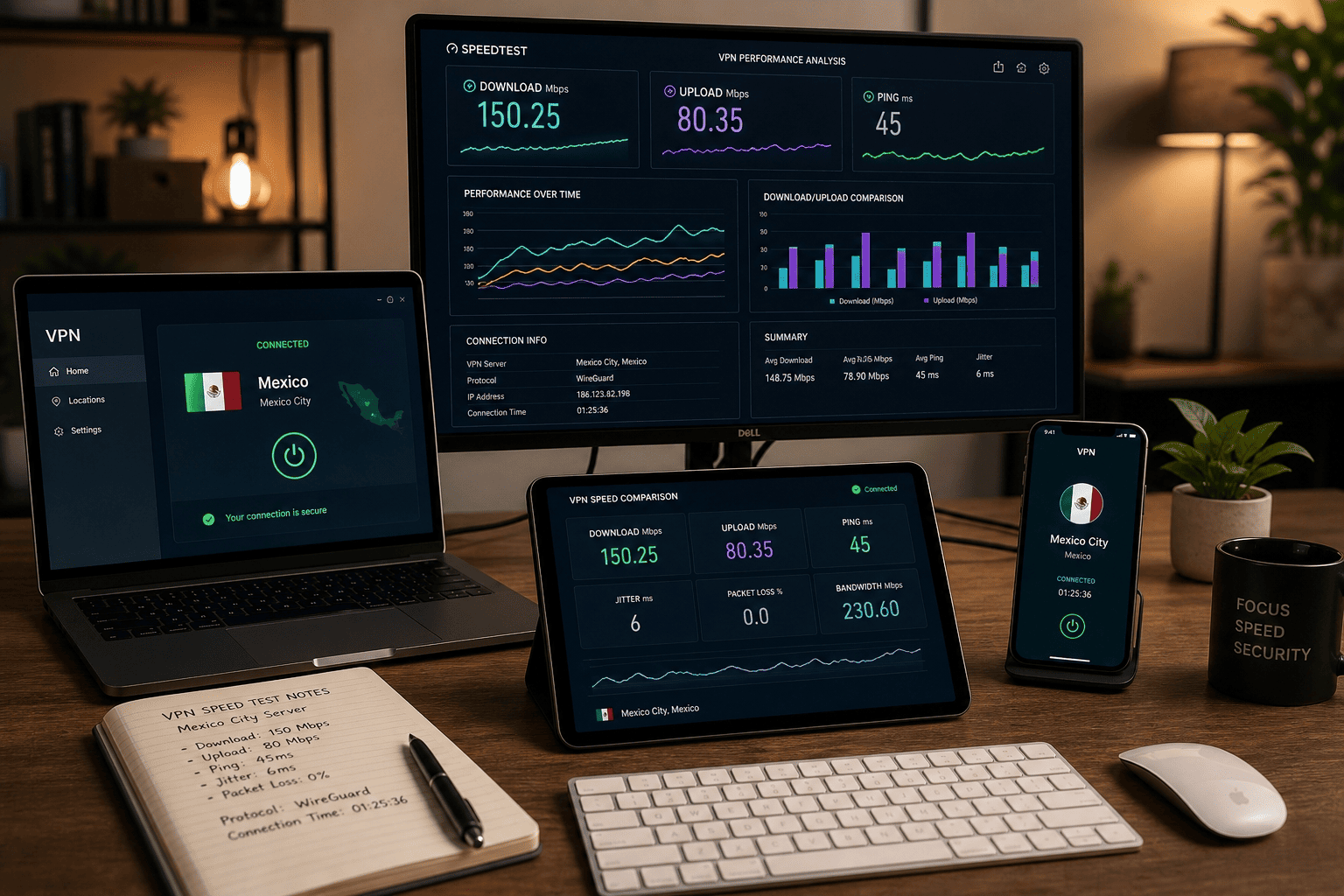
Our rankings are based on hands-on testing, not a copied spec sheet. We focused on how each VPN provider handled Mexico access in normal use: browsing, streaming, switching devices, and connecting on typical home and travel internet setups. We also looked at privacy and security because speed is only half the story.
For this guide, we compared the services that consistently offered servers in countries that matter for travel as well as working servers in Mexico. We also considered practical buying factors like app quality, refund terms, and whether a long enough money back guarantee gave readers room to test the service properly.
Testing Criteria We Used for Ranking
We ranked each service using a mix of speed, reliability, privacy, and streaming performance. Mexico-specific access was a major part of the process because this guide is not about general-purpose VPNs alone. A service that is excellent in the abstract but weak with Mexican servers does not deserve a top spot here.
Streaming success mattered because many readers want a Mexican IP address for local platforms or want stronger international access while in Mexico. We also looked at how often a service connected cleanly, how stable it remained during longer sessions, and whether the apps stayed easy to use once the basics were enabled.
The result is a balanced ranking rather than a single-metric list. Fast speed helped, but poor privacy and security could still drag a provider down.
What We Looked for in Security and Privacy
Privacy and security were central to the ranking. We looked for a clear no-logs stance, modern encryption, DNS leak protection, and a kill switch that behaved properly if the connection dropped. These are baseline features for serious VPN use, but not every provider implements them equally well.
We also weighed transparency signals. Open-source apps, outside audits, and a clearly written policy are useful because they give readers more than marketing language to rely on. ProtonVPN gets attention here because of its privacy posture, while NordVPN also remains strong thanks to a clearer, more mature approach to privacy and security.
For Mexico use, this matters most if you connect on shared networks or want a service that handles data carefully by design. A good policy is not glamorous, but it is one of the reasons some VPNs deserve more trust than others.
How We Evaluated Apps, Devices, and Support
Apps can make or break a VPN recommendation. We checked how each provider handled setup on Windows, mobile devices, and common streaming platforms, and we favored services that were easy to use without hiding important controls. Good apps should not force readers to choose between simplicity and function.
We also considered device limits and unlimited simultaneous connections. A service with broader support across phones, laptops, tablets, and TV platforms has a clear advantage for families and heavy users. That is one reason Surfshark and IPVanish stay relevant in this ranking.
Support quality mattered too. If a Mexico server stopped working or a streaming platform rejected an IP address, we favored providers that made troubleshooting straightforward instead of leaving users to guess.
Why Price and Refund Terms Matter
Value matters more than a low headline rate. A cheap plan that struggles with Mexico access is not a bargain, while a pricier option can justify itself if it is easier to use, more stable, and more private. We compared monthly pricing with longer subscriptions, especially year plan and day money back options that reduce buying risk.
Refund terms are especially important with streaming VPNs because real-world performance can vary by device, network, and platform. A genuine money back guarantee gives readers time to test servers in mexico, app behavior, and playback quality without feeling locked in. The best services make that process simple.
We also looked at household value. Unlimited simultaneous connections can outweigh a higher sticker price if the plan covers many devices for many months. In that sense, the day money back guarantee is useful not just as a promise, but as a practical way to test vpns before committing.
Privacy and Security Features
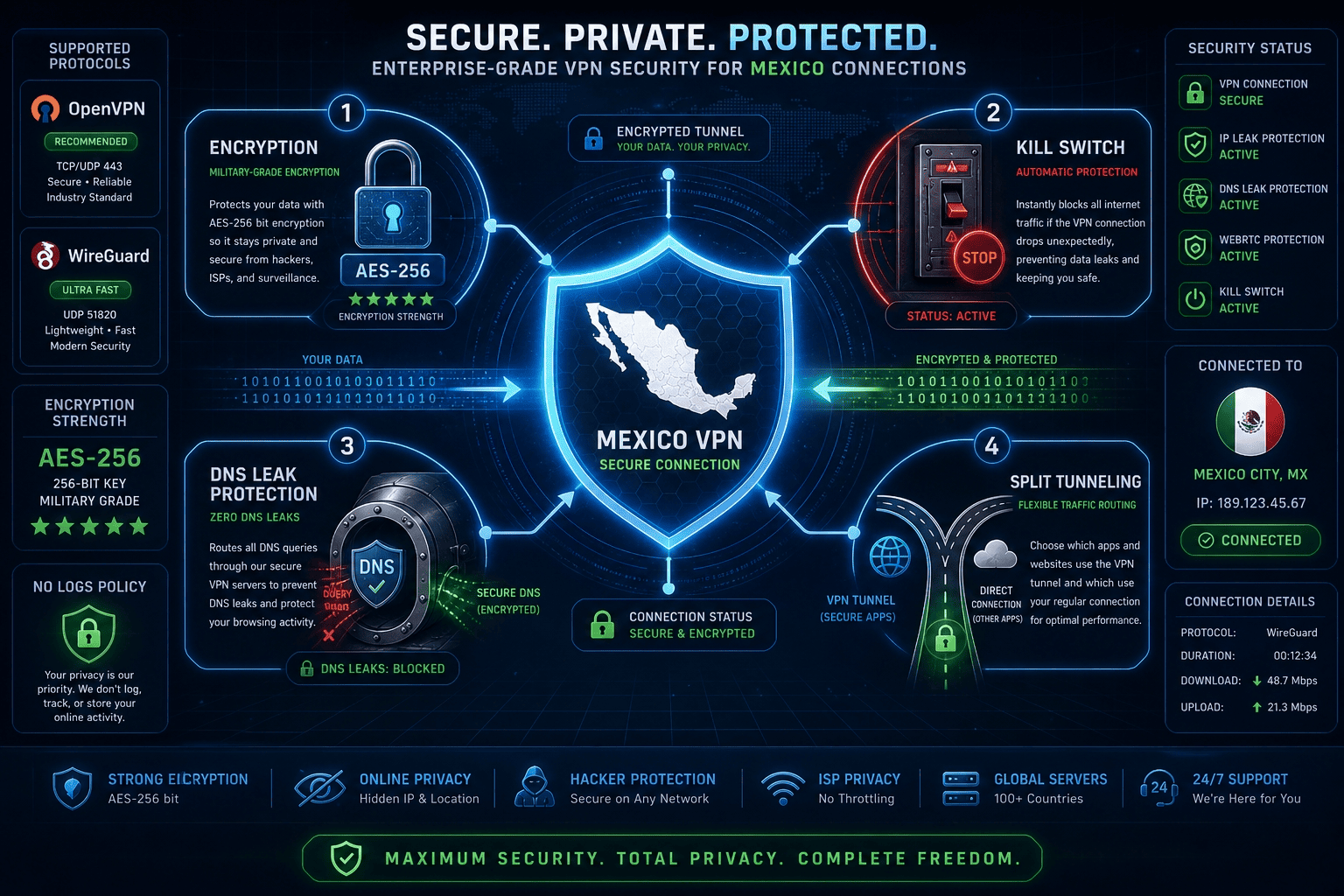
A VPN for Mexico should not only help with access. It should also protect your data, reduce exposure on public networks, and keep the service simple enough that you will actually leave it on. That is the balancing act behind most modern privacy and security decisions.
The good news is that the leading providers now cover the basics well. The differences show up in the details: how clearly the policy is written, whether the logs policy has trust signals behind it, and how well advanced security features work in everyday use.
No-Logs Policies and Trust Signals
A no-logs promise means the provider says it does not keep records of the websites you visit, the content you stream, or the activity tied to your session in a personally identifying way. In practice, readers should not treat every logs policy as equal. Clear wording matters. So does outside verification.
Trust signals can include independent audits, open-source apps, transparency reporting, and a company track record that holds up under scrutiny. ProtonVPN gets attention here because of its privacy posture, while NordVPN also remains strong thanks to a clearer, more mature approach to privacy and security.
For Mexico use, this matters most if you connect on shared networks or want a service that handles data carefully by design. A good policy is not glamorous, but it is one of the reasons some VPNs deserve more trust than others. It is also why private internet habits matter even when the connection feels simple.
Encryption, Kill Switch, and Leak Protection
Encryption is the process that scrambles your traffic so others on the same network cannot read it easily. In plain terms, it turns readable internet data into something much less useful to anyone snooping on a public Wi-Fi connection. That is table stakes for a serious VPN.
A kill switch is just as important. This feature cuts your internet traffic if the VPN connection drops, which helps prevent your real IP address from leaking during a brief outage. On unstable hotel or airport networks, that matters more than many users realize.
Leak protection covers DNS leak and IP exposure. DNS requests can reveal what website you are trying to reach even if the rest of your traffic is tunneled, so strong DNS leak protection is a practical security feature, not a box-checking exercise.
Split Tunneling and Extra Privacy Controls
Split tunneling lets you decide which apps or websites use the VPN and which use your normal internet route. In simple terms, it is a traffic sorter. That can be useful if you want one browser tab to use a Mexican IP address while another app keeps your local connection for banking, gaming, or a nearby service.
Some providers also include extra controls such as obfuscation, which disguises VPN traffic so it looks more like regular encrypted traffic. That can help in restrictive network environments, though it is not a feature every reader in Mexico will need daily.
For Mexico use, split tunneling is especially handy on mobile devices and Windows laptops where streaming, work tools, and local apps often need different routing behavior.
Balancing Security With Everyday Convenience
The best security setup is the one you will keep using. That usually means enabling the kill switch, sticking with the default modern protocol unless you have a reason to change it, and choosing a nearby server when you do not specifically need another country. Strong privacy and security do not have to feel like a chore.
App defaults matter here. Services that make good choices out of the box are easier to recommend because fewer users end up accidentally weakening their own protection. NordVPN and ExpressVPN do this well, while more customizable apps can take a bit more attention.
Server Network and Speed
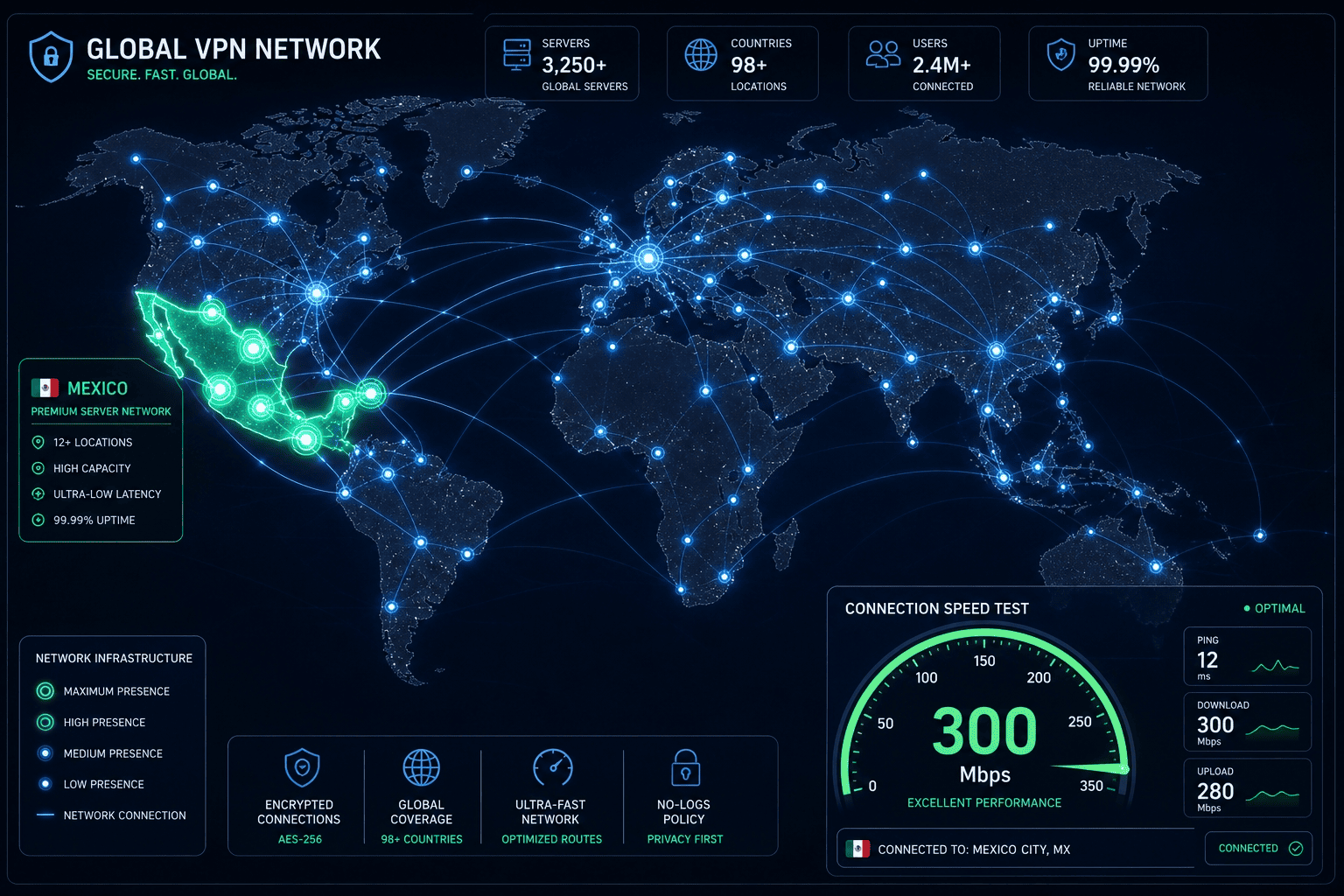
Server size alone does not make a VPN better, but the shape of the server network often tells you how flexible and reliable the service will feel. For Mexico use, you want enough Mexican servers to avoid congestion and enough global coverage to stay useful when your needs change.
Speed is the other half of the equation. A VPN always adds some overhead because your data has to pass through the encrypted tunnel, but the best services keep that cost modest and the connection stable.
Why Server Location Affects Performance
Distance matters. The farther your traffic has to travel to reach one of the VPN servers, the more latency you are likely to see. That delay may be tiny for browsing, but it becomes obvious with live streams, app logins, and anything interactive.
Choosing servers in mexico keeps routing direct and access more predictable. Local server locations also help if a streaming service expects traffic to look genuinely Mexican rather than oddly routed through a distant path.
How Fast Speeds Change the Experience
Fast speeds improve nearly everything: page loads, HD video startup, 4K streaming, and large downloads. They also make a VPN easier to live with because the service fades into the background instead of reminding you that your traffic is being rerouted.
Protocol choice matters here. WireGuard, a newer protocol built for efficiency, and equivalents like NordLynx or Lightway often produce better speed than older options in normal use. That is one reason the premium services tend to feel smoother across many devices and network conditions.
Speed testing matters because marketing language does not tell you how the connection behaves when real content starts flowing. A quick connect is nice. Sustained performance is nicer.
Stability During Heavy Use
Heavy use reveals weaknesses fast. Peak-time congestion, packet loss, and inconsistent routing can all turn a decent VPN into an annoying one, especially during long streaming sessions or travel days when hotel Wi-Fi is already stretched thin.
This is where a stronger server network helps. More capacity and better traffic distribution usually mean fewer random slowdowns and fewer disconnects under load. It also means the VPN is less likely to crumble when many users pile onto the same region at once.
For Mexico use, stability matters as much as headline speed. A slightly slower connection that stays steady is often better than a faster one that keeps dropping.
Choosing the Best Network for Your Needs
Pick the network that matches your habits. If you mainly need Mexico access, prioritize reliable Mexican servers and consistent performance over sheer server count. If you travel often or switch between many countries, a broader global network becomes more valuable.
Larger networks can offer better flexibility, but only if the service manages them well. Readers should care about consistency, connection quality, and usable apps just as much as the raw number of servers.
In this ranking, NordVPN and ExpressVPN best balance network breadth with day-to-day reliability, while Surfshark remains the value choice for multi-device households. If you want to find the best fit, think first about how you actually browse, stream, and work.
Streaming and Unblocking Capabilities
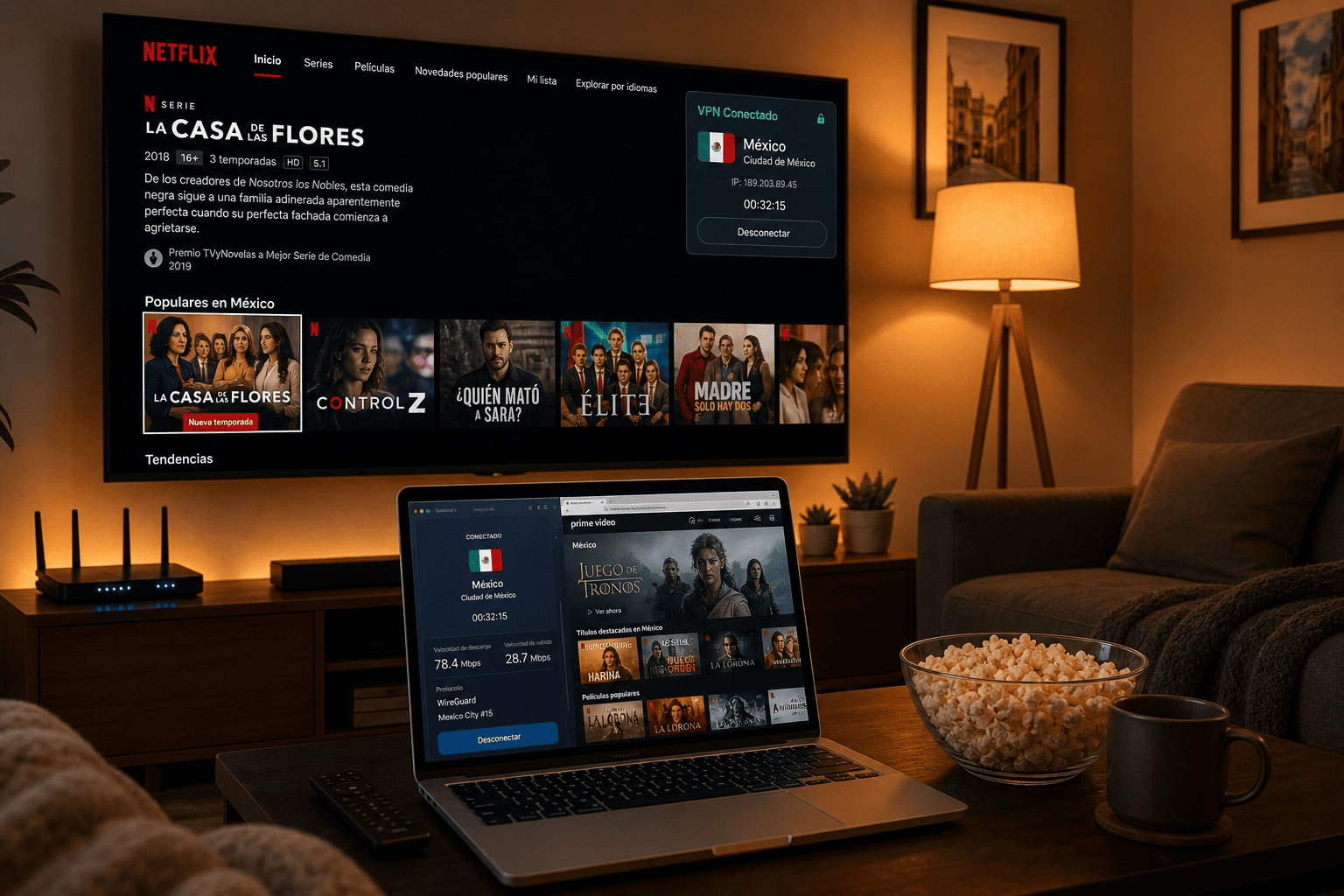
Streaming is the reason many readers start looking for the best VPN for Mexico in the first place. Some want local Mexican content while abroad. Others are in Mexico and want smoother access to international streaming services like Netflix or Amazon Prime Video. Either way, a VPN can help, but only if the provider maintains reliable servers and reacts quickly when platforms change their detection systems.
That last point is important. Access can change over time because streaming services update blocking methods, rotate IP filtering rules, and behave differently across devices. The strongest providers are the ones that recover quickly and keep enough working servers available that users are not stuck playing roulette every night.
Netflix Mexico and Other Local Platforms
For local content, Netflix Mexico is the obvious starting point, but it is not the only one that matters. Readers often want a VPN that can access broader Mexican content libraries, regional TV platforms, and local website services that check location by IP address. That is why Mexican servers matter more than a generic “Latin America” label.
NordVPN, ExpressVPN, and Surfshark were the most convincing choices here because they combined stable connection behavior with better access consistency. Windscribe also deserves mention for Mexican streaming services, especially if your focus is narrower and you are comfortable with a slightly less polished overall package.
Results can change, though. Streaming services update filters all the time, and a server that works one week may need rotation later. That is normal. The best providers are not the ones that promise permanent access, but the ones that respond quickly when access shifts.
Watching U.S. Libraries While in Mexico
Many readers in Mexico are trying to reach U.S. content rather than local libraries. That includes Netflix regions, major streaming services, sports apps, and subscription platforms tied to a U.S. home account. In those cases, you are usually choosing between Mexican servers for local use and U.S. servers for international access.
Speed matters more here because distance is often greater and the content itself can be heavier. HD and 4K playback require a stable connection with enough headroom that the stream does not constantly rebuffer. App quality also matters because switching locations should be simple, especially on phones, tablets, and TV platforms.
This is where NordVPN and ExpressVPN usually feel strongest. Their apps are easier to manage across devices, and the VPN can switch between countries without turning the process into a small project.
Sports, Live TV, and Event Coverage
Live streams are less forgiving than on-demand content. Buffering during a movie is annoying; buffering during a game-winning drive is something else. Sports, live TV, and event coverage depend heavily on latency, stable routing, and a VPN connection that does not wobble just as traffic peaks.
Platforms carrying live content can also be harder to unblock than standard video libraries because they monitor unusual traffic patterns more aggressively. That makes server quality and rotation speed more important than raw server count alone.
For these use cases, I would lean toward NordVPN or ExpressVPN first, with Surfshark close behind if value matters more. The stronger providers simply hold their shape better under pressure.
What to Do When a Service Stops Working
If a streaming service suddenly stops working, start with the simple fixes. Disconnect and reconnect to a different server in the same country. Clear your browser cookies and cache, or fully restart the streaming app. If you were trying to access a local platform with a Mexican IP address, confirm through an IP lookup website that your address still shows Mexico and not your real location.
If that does not help, switch protocols inside the app. WireGuard or a proprietary equivalent is often the fastest choice, but another protocol can sometimes work better with a specific network or service. Also check whether split tunneling is interfering with the app you are using. If the wrong app bypasses the VPN, your location data may not match your intended access region.
You should also test on another device if possible. Sometimes the issue is tied to one app, one browser, or one cached session rather than the VPN itself. If Netflix or Amazon Prime Video still fails after that, contact support and ask which servers are currently recommended for the platform. Good support teams usually know which locations are working.
One more caveat is worth keeping in mind: using a VPN for lawful access to subscriptions you already pay for is generally legal in many places, but streaming platforms’ terms may discourage bypassing regional restrictions. Some countries also restrict VPN use more broadly, including China, Russia, the UAE, Iran, and Belarus. That does not affect most readers focused on Mexico, but it is still useful context if you travel often.
Pricing and Value
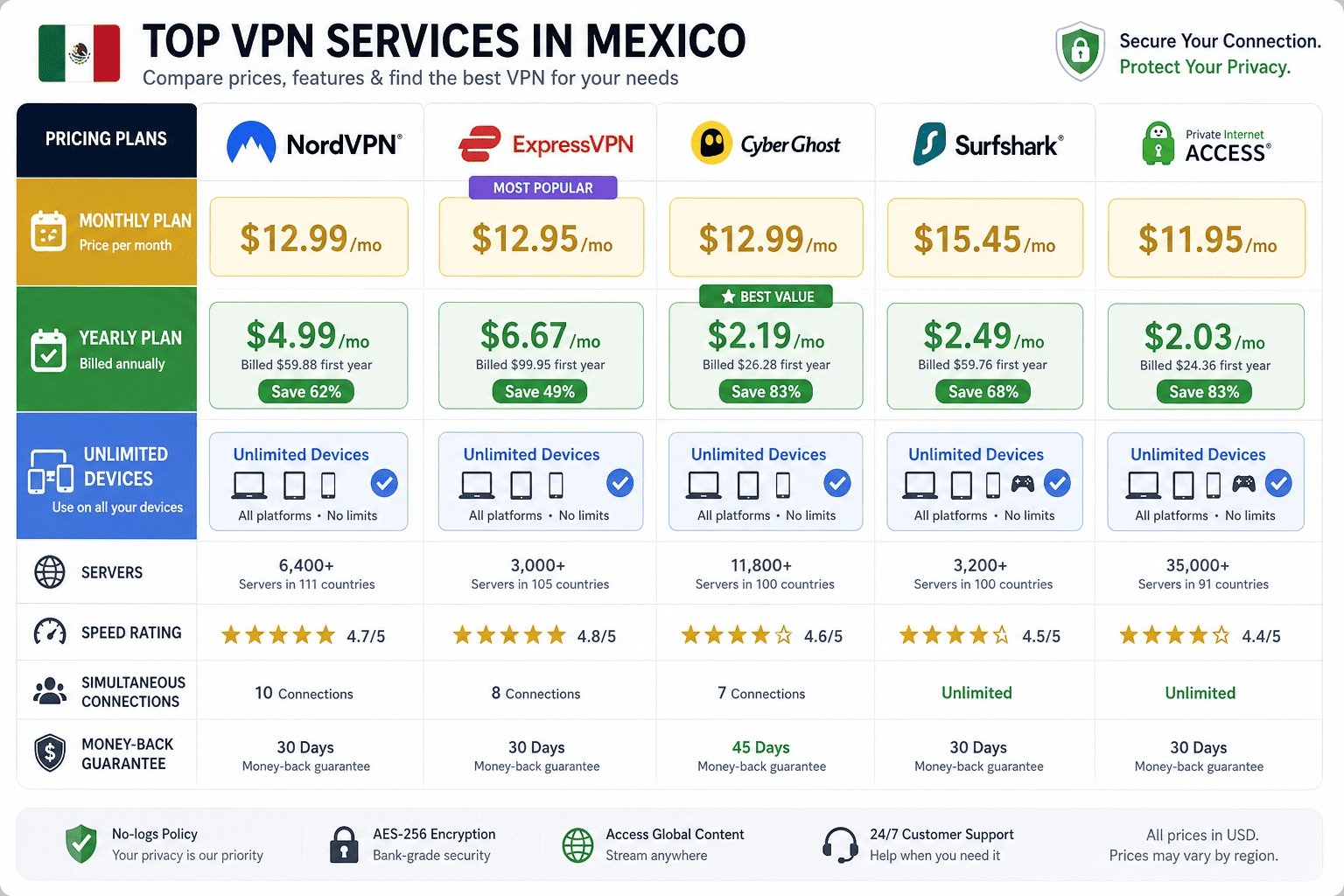
A low headline rate per month can be attractive, but the real question is what you get for the money: better servers, stronger privacy, more devices, and a long enough refund window to test the service properly.
For Mexico use, value usually comes down to three things: reliable access, enough speed for streaming, and a plan that fits how many devices you actually need to cover.
Monthly vs Long-Term Plans
Monthly plans are useful if you only need a VPN for a short trip, a temporary stay in Mexico, or a brief testing window before making a bigger commitment. They cost more per month, but they reduce the upfront spend and keep your options open.
Longer subscriptions, including a year plan and many two year plans, almost always offer better value. You pay more at checkout, but the effective monthly cost is lower over time. That makes them the better plan for readers who expect to use a VPN regularly for streaming, privacy, or travel.
If you already know you want ongoing access, long-term pricing usually wins.
Free Trials, Refunds, and Guarantees
Free trials can help, but they are often limited by platform, payment method, or feature access. A proper money back period is usually more useful because it lets you test the full service on your own devices and home network.
Look for a clear refund policy and a real money back guarantee rather than vague language. The back guarantee matters because Mexico server performance can vary by app, device, and internet provider. You want enough time to test the service in your own setup.
Just read the terms carefully. A guarantee is only helpful if the cancellation process is straightforward. That is where a provider’s privacy policy and support pages should be easy to understand, not buried in fine print.
Best Value for Families and Heavy Users
For families and heavy users, device limits matter as much as price. A cheaper plan loses some shine if it only covers a handful of devices and you need to protect phones, tablets, laptops, and streaming boxes at the same time.
That is why unlimited devices can be such a strong value feature. Surfshark and IPVanish are especially appealing here because one subscription can cover a full household without extra planning. Over many months, that convenience can outweigh small differences in headline cost.
If your household is large, count devices first and compare plans second. In practice, the best vpns for a family are often the ones that can be installed once and forgotten.
Final Value Verdict
NordVPN is the strongest value if you want the best balance of access, privacy, and long-term usability. Surfshark is the budget pick if lower cost and unlimited devices matter most. ExpressVPN makes sense if you are willing to pay more for polish and convenience.
The cheapest option is not always the one that saves the most money. If a service wastes your time, struggles with Mexican servers, or needs constant troubleshooting, the lower price stops looking so clever.
FAQs
Are VPNs Legal in Mexico?
Can I Use a VPN for Streaming in Mexico?
Will a VPN Improve My Security on Public Wi-Fi?
Which VPN Is Best for a Mexican IP Address?
Do VPNs Slow Down Internet Speed?